

Shinjyuku Sushi Bar Nigirite
Tokyo
Sushi
Sushi That Counts Its Days
Five or six minutes from the west exit of Shinjuku Station, one street behind Kotakibashi dori, a small sushi counter displays an unusual detail on its menu. Beside many of the fish are numbers: 8, 9, 10, 14. They are the number of days each fish has been aged.
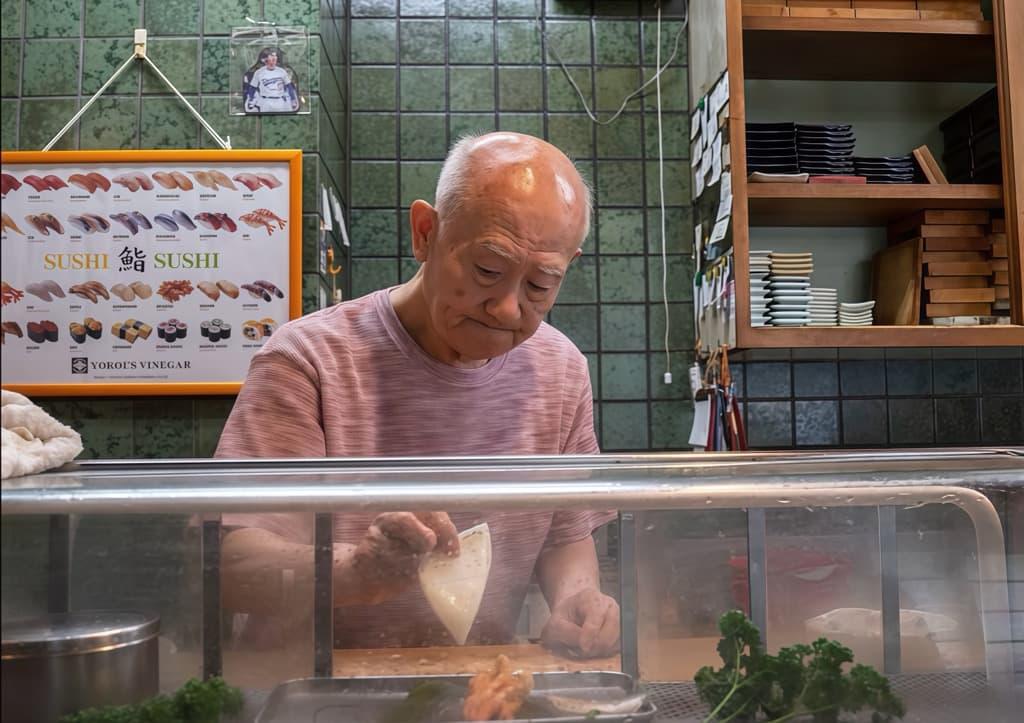
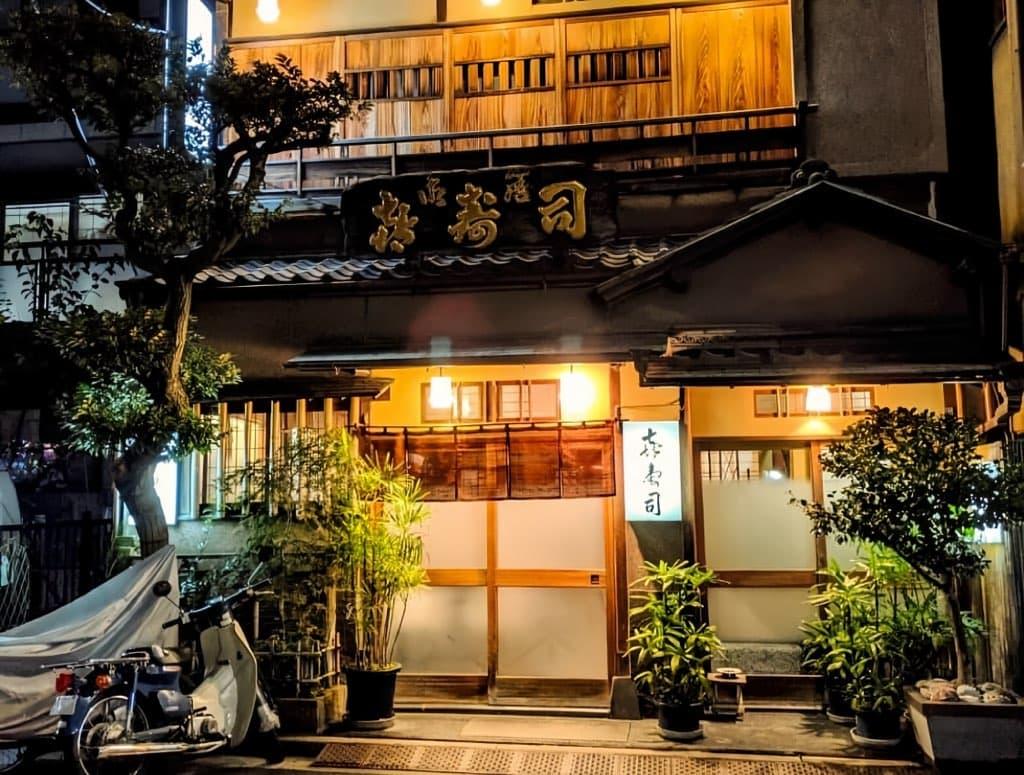
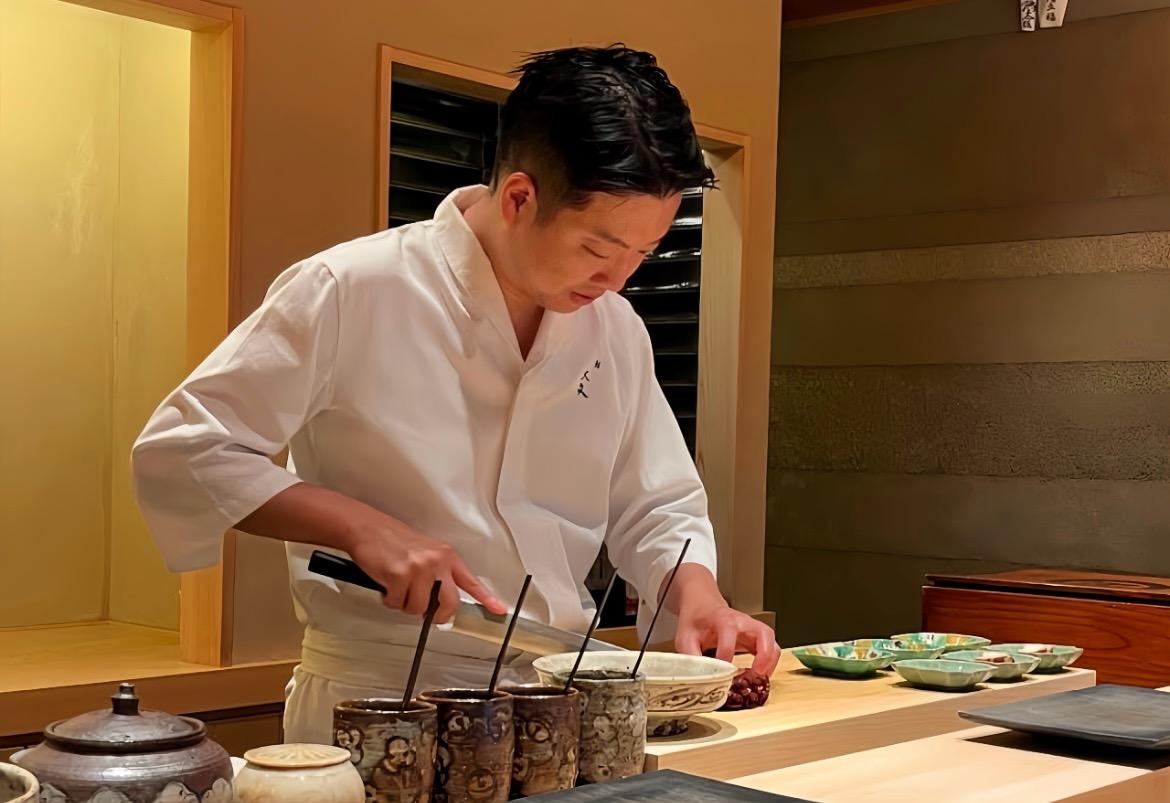
Sushi Bar Nigirite has been serving aged fish here since 2015. On one weekday visit, six people were already waiting outside at 11:27, three minutes before opening. Many of the menus and signs are written in English, and overseas diners now fill much of the counter. The room itself remains compact and straightforward, with narrow seats and none of the ceremony associated with high end sushi.
Freshness matters in sushi, but some fish improve after several days of careful handling. Nigirite is certified in the Tsumoto method, a bleeding technique used to remove blood efficiently from the fish before it is stored at low temperature. Some fish are served after only a few days. Others rest for more than a week, and occasionally beyond two. The number written beside each name tells you how long that particular fish has been held before serving.
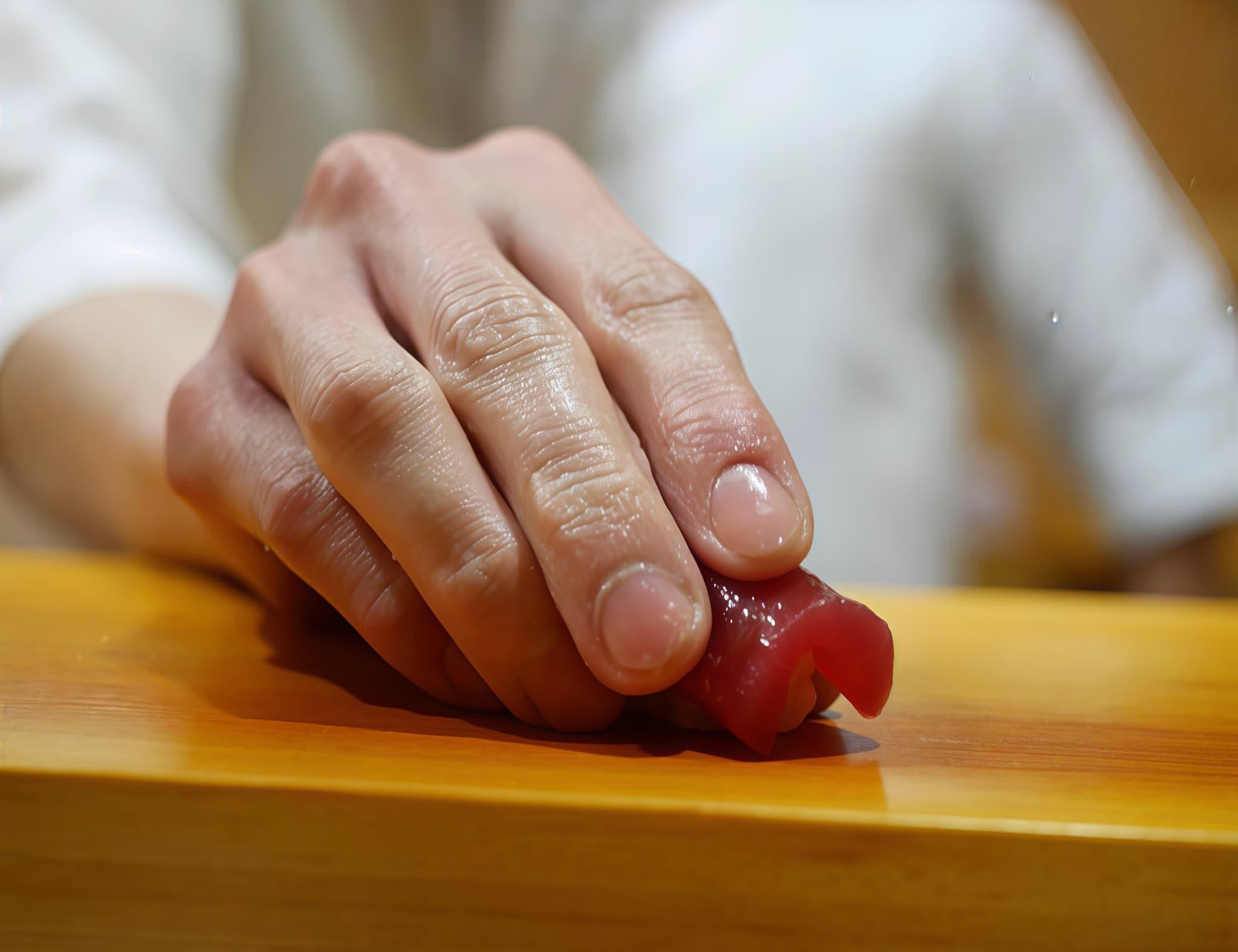
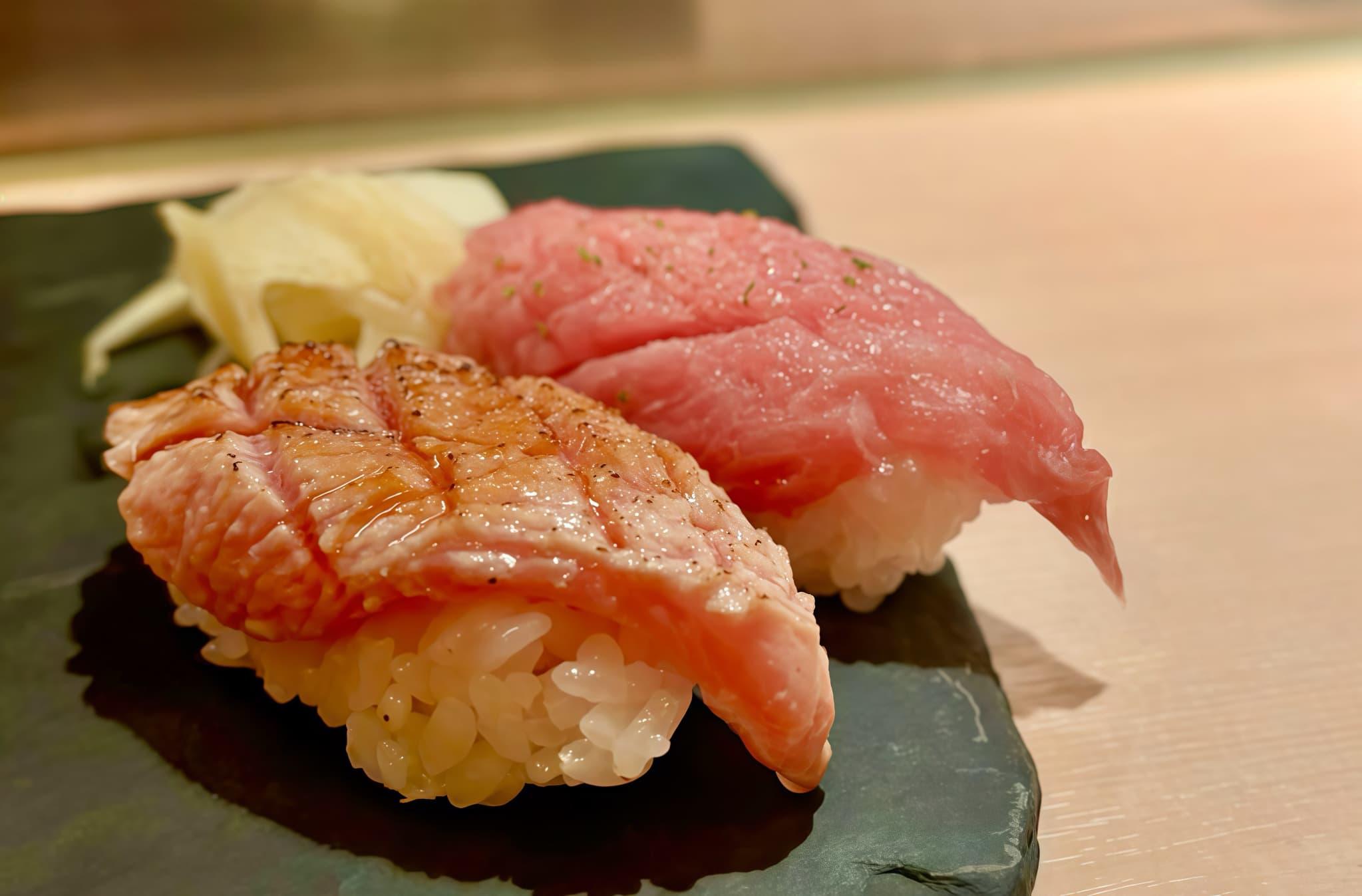
The difference becomes clear once the aged pieces start arriving. A ten day Meichidai (gray large-eye bream), nine day Mejina (largescale blackfish), eight day Saba (mackerel), or the restaurant's aged Shinshu salmon has a dense, almost sticky texture, with sweetness that becomes more concentrated over time. Proper bleeding also changes the character of oily fish. In the Saba, much of the familiar metallic note disappears, leaving the richness of the fat much more exposed.
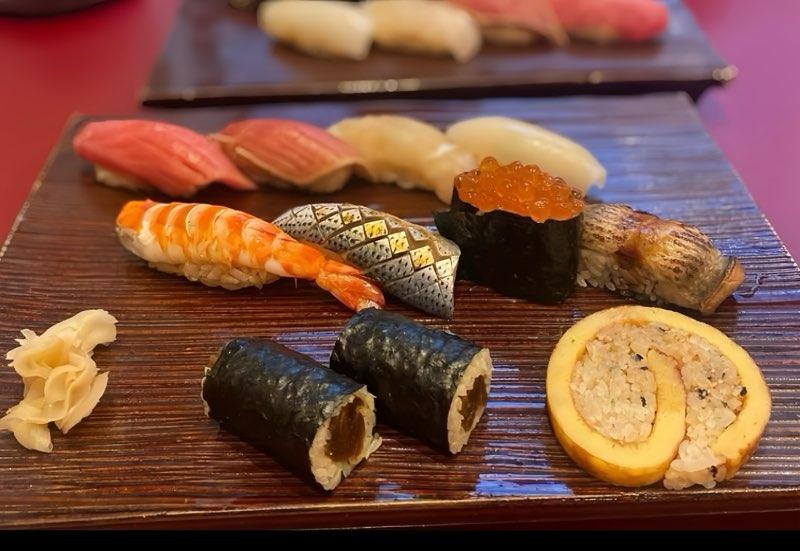
Aged fish is generally served as two pieces, and the chef often gives each one a different seasoning. The second piece is not simply a repeat of the first. Kanpachi (greater amberjack) may arrive with fine knife work across the surface over slightly sweet white vinegar shari. Abura bozu (skilfish), an exceptionally fatty fish, is lightly seared so some of that richness melts before it reaches the mouth.
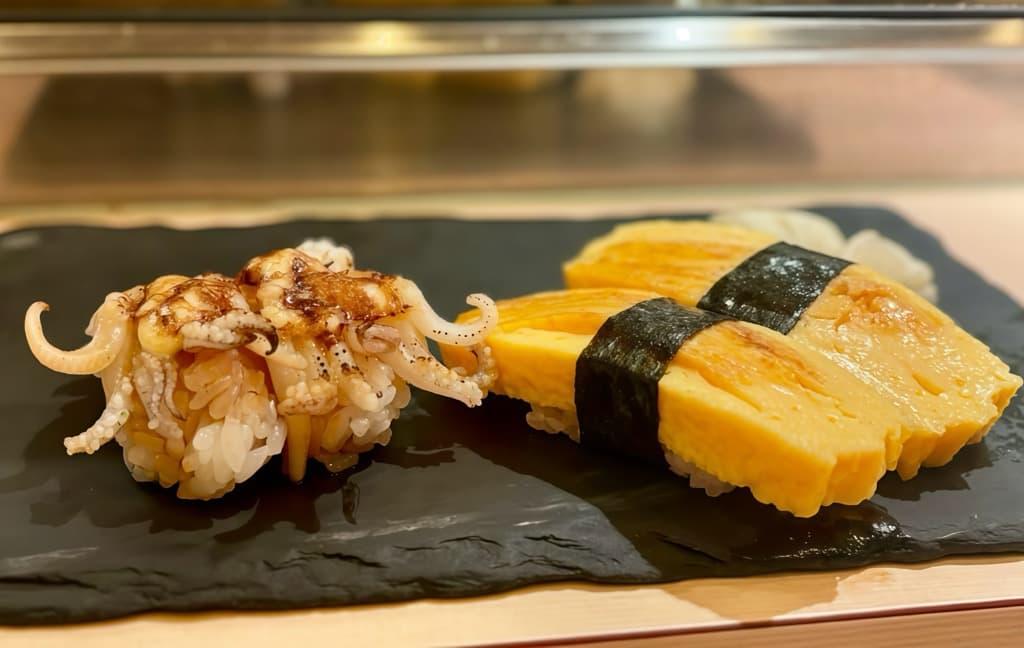
Lunch is the easiest introduction. At the time of writing, the ¥3,500 set includes six more familiar pieces such as Akami (lean bluefin tuna), clam gunkan, negitoro, tamago, Anago (conger eel), and Aji (horse mackerel), followed by three aged selections and a bowl of aosa seaweed soup.
It is also easy to add individual pieces from the aged fish list. On one visit, adding another piece of aged Saba and seared Engawa (flounder fin meat) brought the bill to ¥4,310. Dinner offers both omakase and à la carte ordering from the same selection, making it possible to concentrate almost entirely on the aged fish if that is what you came for.
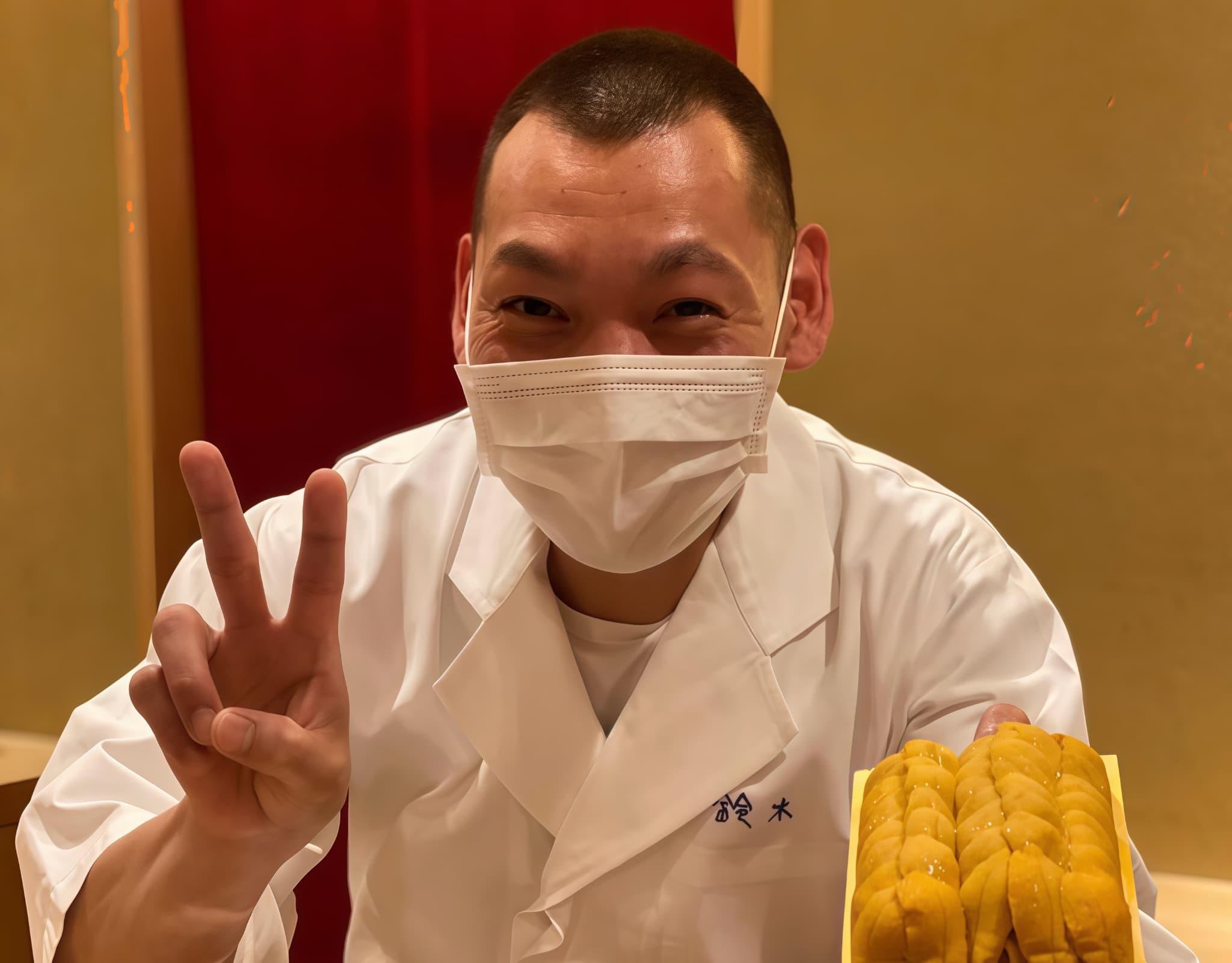
The kitchen runs with two chefs and one member of floor staff. Service moves quickly, jazz plays in the background, and nobody is concerned about how formally you are dressed. Nigirite takes the handling of its fish seriously without turning dinner into a formal occasion.
For a first encounter with aged sushi, that makes it an unusually easy place to start.
Overview
| Cuisine | Sushi |
|---|
Frequently Asked Questions
Shinjyuku Sushi Bar Nigirite
Every fish is bled by the Tsumoto method on arrival, held cold, and rested for a number of days chosen per fish — from a few days to more than two weeks — before it is cut. The day count is printed on the menu.
No. Lunch is a fixed 9-piece set around ¥3,500; dinner is omakase or by the piece. It is a sushi bar, not a ryotei.
Yes — menus and signage are largely in English, and the counter is used to overseas guests.
It is one of the easiest places in Tokyo to try it: casual room, clear labeling of aging days, and classic pieces on the same menu to compare against.
Courses

Lunch
à la carte
Booking fee ¥1,000

Dinner
à la carte
Booking fee ¥1,000
Restaurant information
| Working Hours | 12:30 - 14:00 17:00 - 23:00 |
|---|---|
| Seats | 15 |
| Payment | Visa, MasterCard, American Express, Cash |
| Smoking | Not Allowed |
| Alcohol take-in | Not Allowed |
| Phone number | 03-6908-5178 |
| Address | Shinjuku Daikan Plaza Business Kiyota Building, 7-9-15 Nishishinjuku, Shinjuku-ku, Tokyo, Japan |
Location map

2026
September
More counters we can secure for you
Picked by the same team — similar style or nearby.