

Hontosaya
Tokyo
Yakiniku


Asakusa's Neighborhood Yakiniku, Cooked Over Charcoal
Asakusa has been a yakiniku district for as long as anyone here can remember, and Hon-Tosaya is the one the neighborhood keeps coming back to. It sits one street west of Kokusai-dori, a minute from the Tsukuba Express exit — a big yellow sign, a sliding door, a clipboard at the entrance where you write your name and wait on the chairs outside. On weekdays the wait starts at noon. Tabelog put it on its Yakiniku 100 list in 2018; television crews come through often enough that the staff no longer look up.
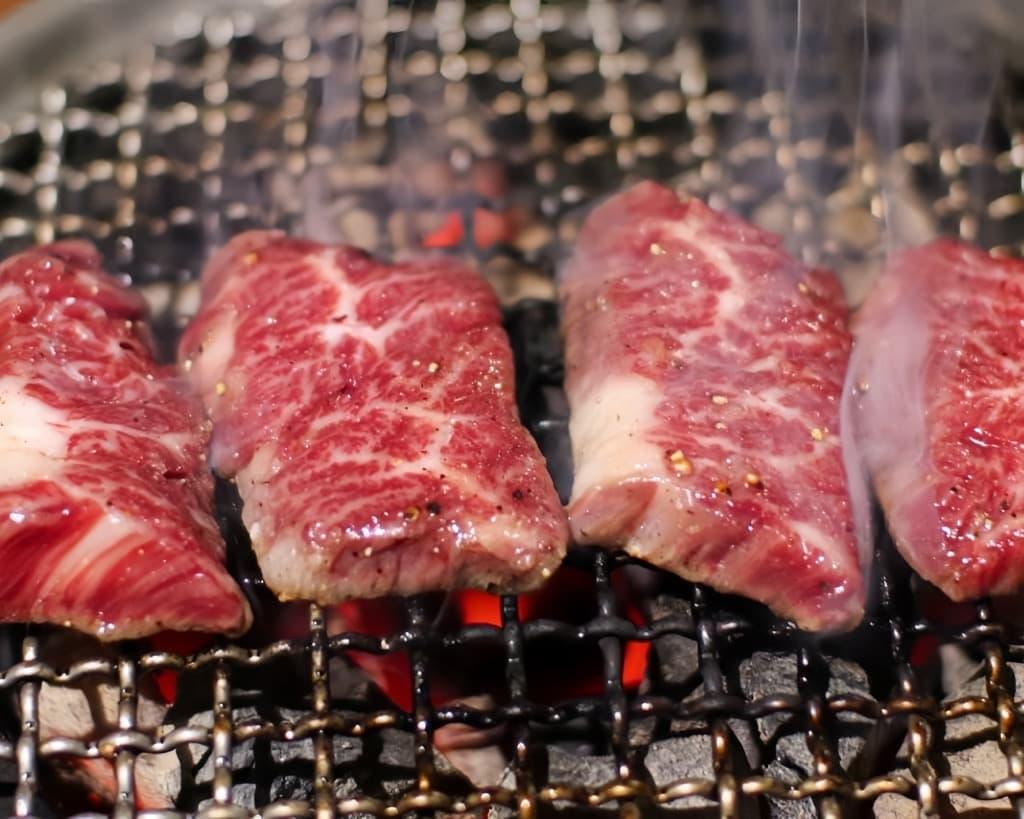
The building is two floors. The ground floor is tatami: low tables, shoes off, and every wall covered edge to edge with signed shikishi boards from the actors, comedians and musicians who have eaten here over four decades. The grills are charcoal, natural-draft on this floor, so the fire runs hot and the smoke hangs. Upstairs there are ordinary tables and a slightly calmer room. A hundred seats in total, which is why it can absorb a family of six and a company year-end party at the same time and still seat walk-ins most nights.
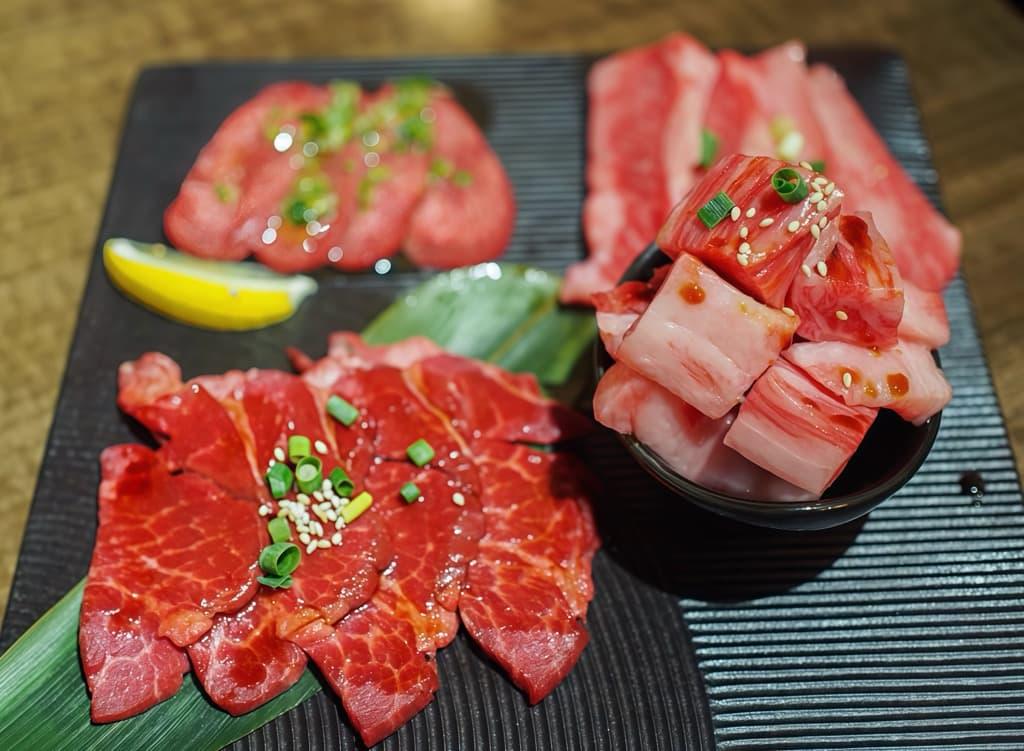
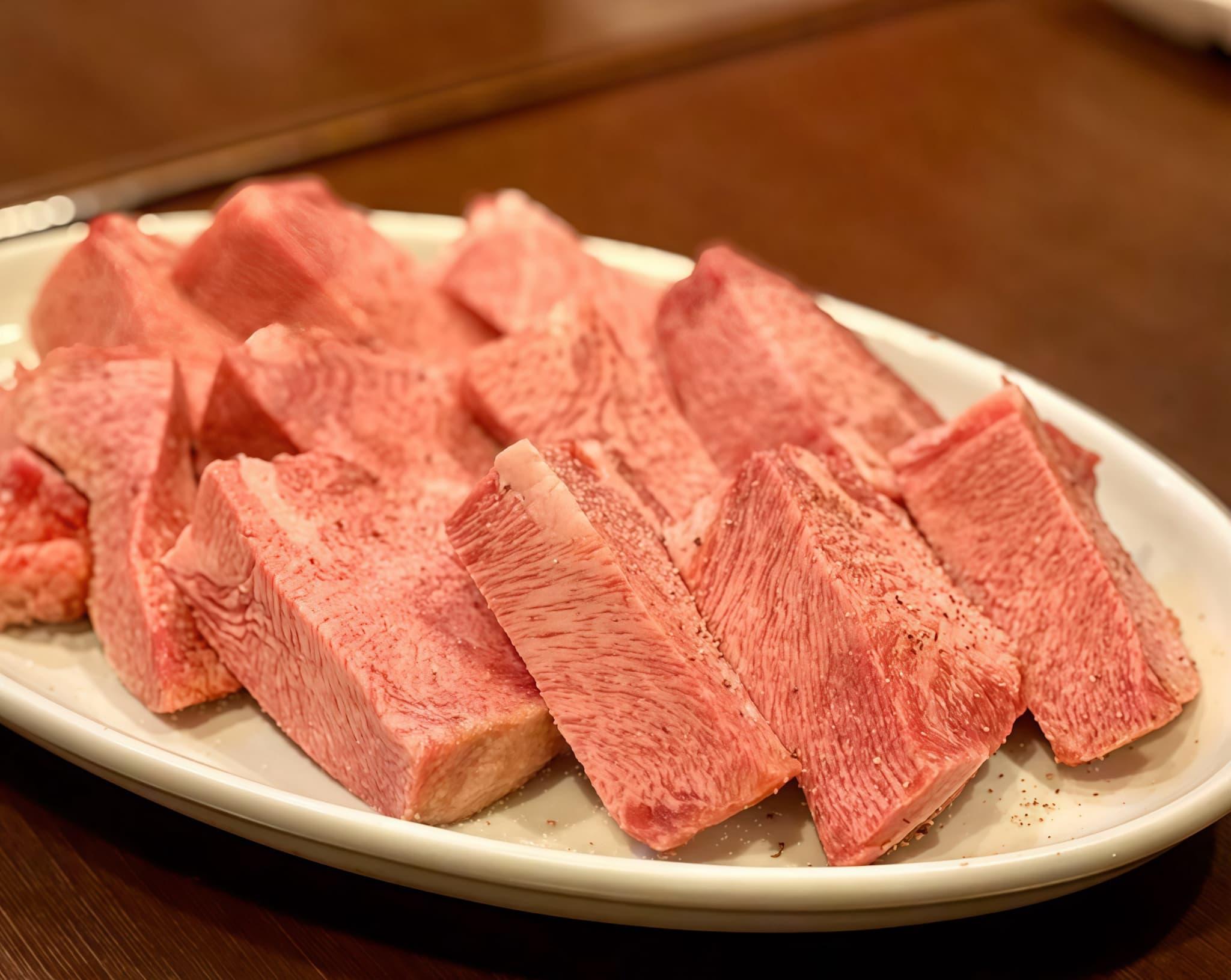
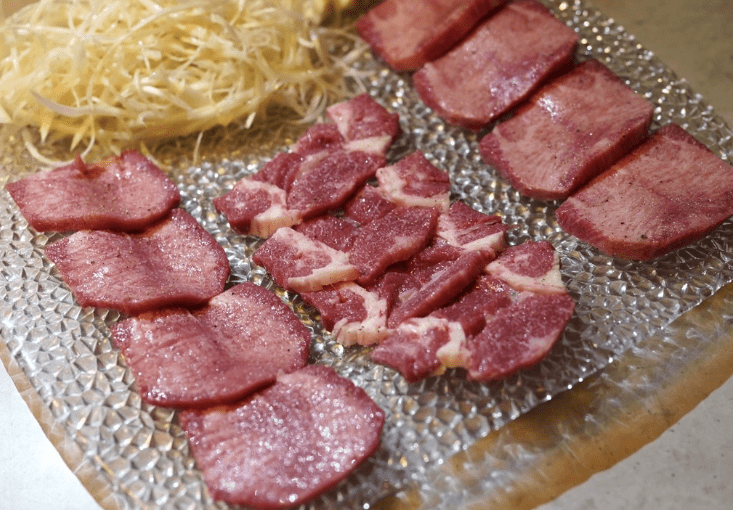
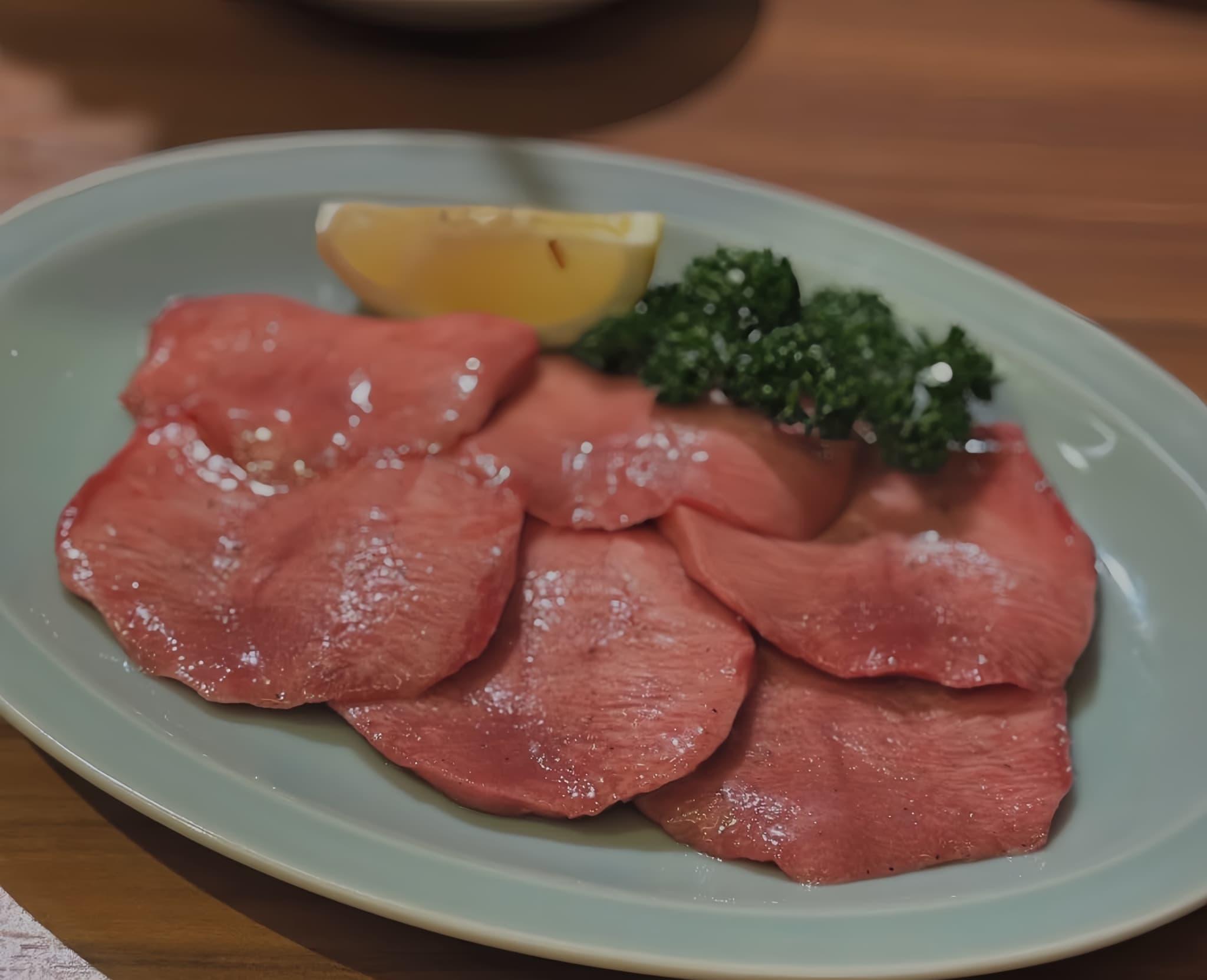
It opened in 1981 and the format has not moved since: meat by the plate, cooked by you over coals, beer in a mug, rice if you insist. What has kept it ahead of the other shops in the area is the buying. The wagyu harami — skirt, a cut most restaurants struggle to source at all — comes in every morning and is inspected before it goes on the menu; anything that does not pass is not served. Tongue is chosen for quality rather than origin, and on a given day the imported tongue here outperforms the domestic black-tongue that other places charge double for. The loin is cut thick, against the current fashion for paper-thin slices, from the eye of the ribeye, and the thickness is set for the charcoal so the outside chars before the fat inside runs.
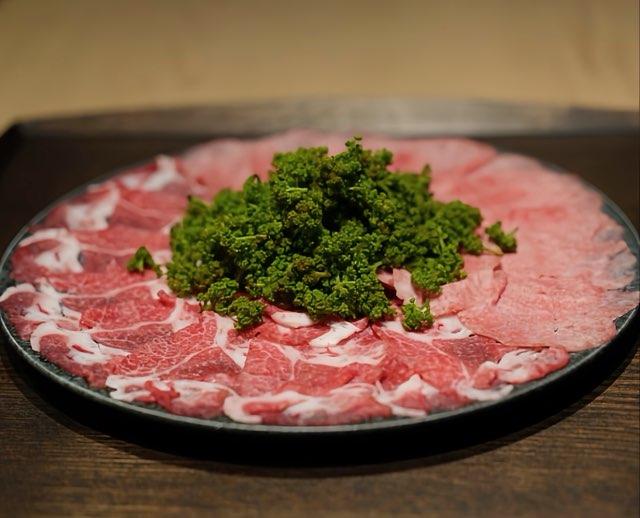
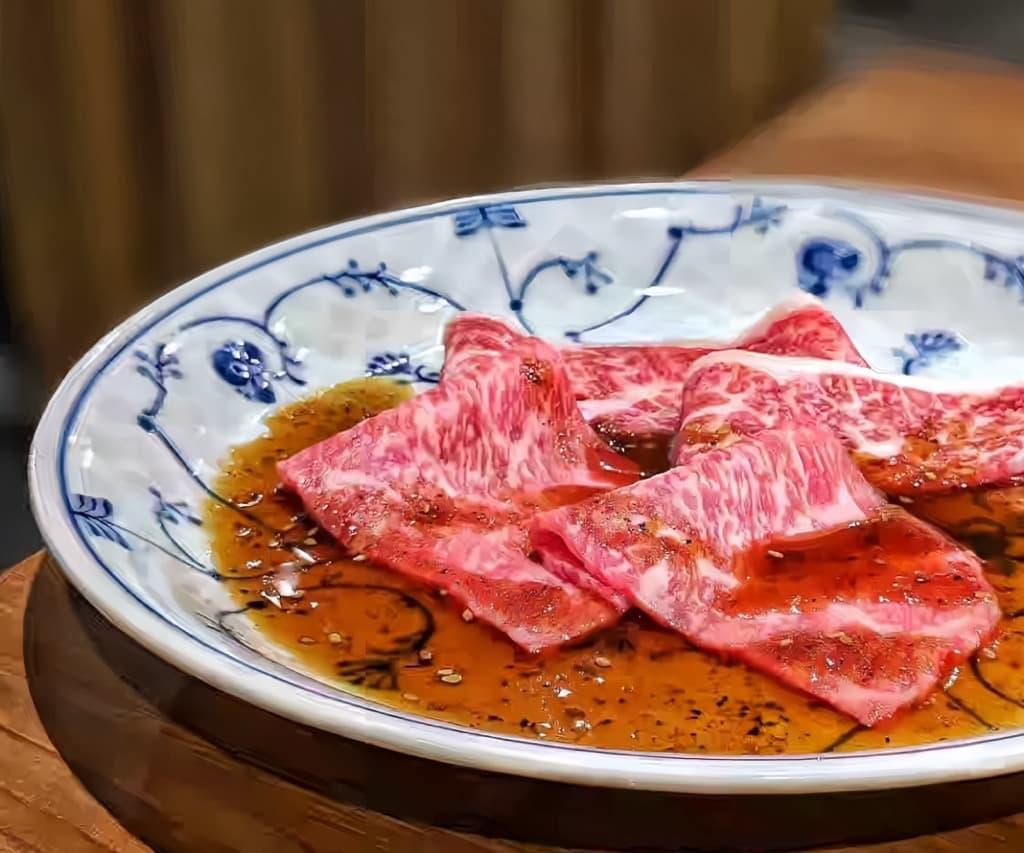
The house tare is sweet, dark and old-fashioned, and it is the reason to order the harami and loin with sauce rather than salt. The regulars' order is jo-rosu gui: loin seared for seconds on each side, then rolled around a bundle of raw scallion and eaten with lemon. The showpiece is the bone-in short rib everyone calls tako-karubi — a slab the size of your hand, marbled through, that arrives on its own plate and takes real attention to cook. Four people is the right number for one order. If you have not done this before, cut it off the bone with the table scissors first.
The menu goes well beyond the grill. There is a full offal section — sutamina-yaki brings intestine, liver, heart, womb and tongue tendon on one plate — and more soups and hot pots than most yakiniku shops bother with: yukgaejang, tegutang, egg soup, a fiery tongue soup, and a cold noodle they call Asakusa reimen served with a round ball of ice in the bowl. Half portions exist for liver and for the soups, which is how two people can get through a dozen items without ordering too much.
Service is fast to the point of abrupt. Meat lands within minutes of ordering, tables turn quickly, and a full dinner for two can be done in forty minutes. Prices are low for the quality and the portions are large; this is a place where a group eats well, loudly, and leaves smelling of charcoal.
What to order
Jo-tan shio (premium tongue, salt): cut thick, seared hard on the outside, still crunchy inside. The charcoal is what makes the contrast.
Wagyu jo-harami (premium skirt): the best-sourced item on the menu. Order it with the house tare, not salt.
Jo-rosu (premium loin): ribeye core, cut thicker than the current fashion for thin loin. Tare again.
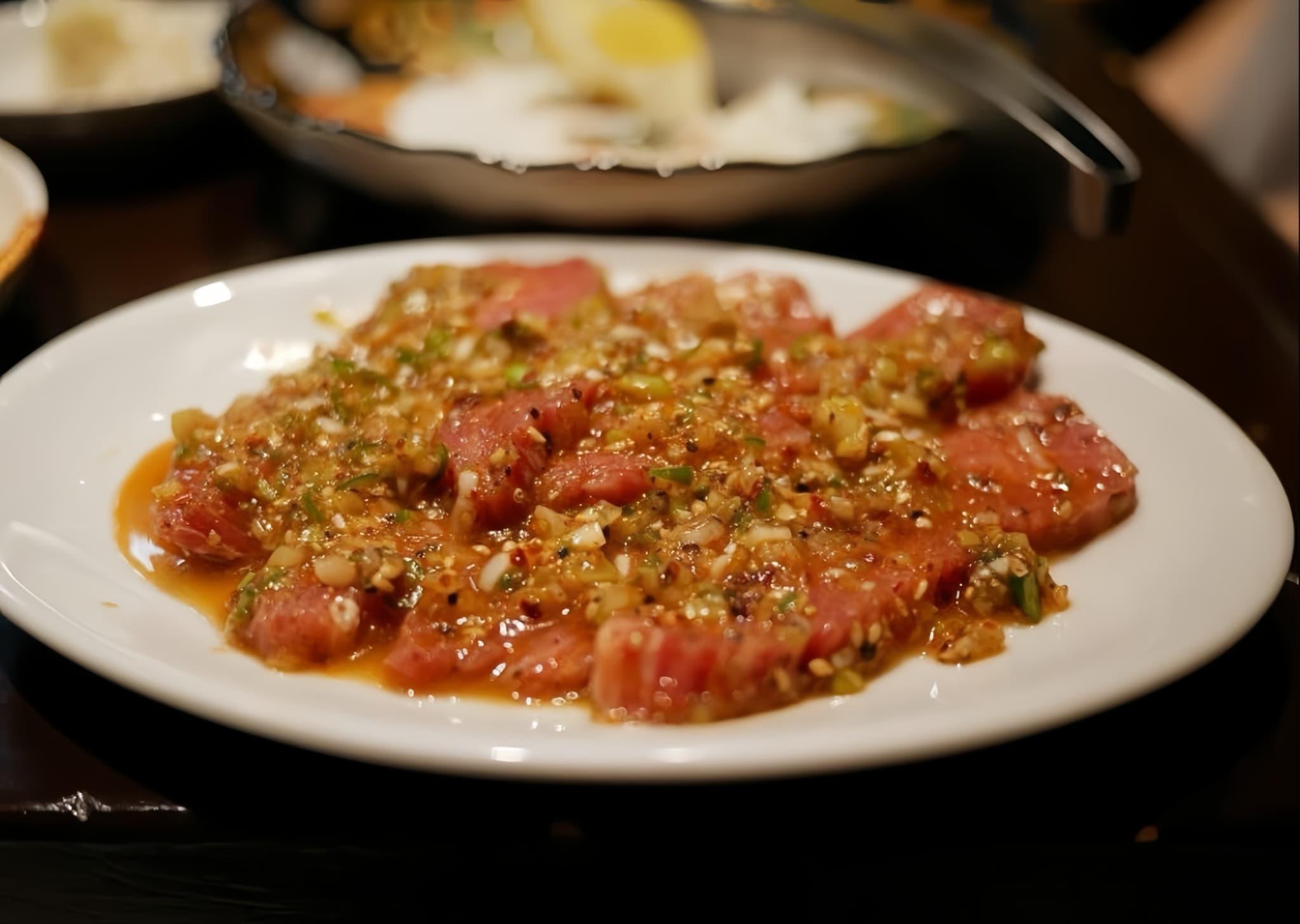
Jo-rosu gui: the same loin, seared fast, then rolled around a bundle of raw scallion. Squeeze lemon over it. Regulars order this first.
Tako-karubi (bone-in short rib): see above. Sells out.
Sutamina-yaki: the offal platter — intestine, liver, heart, womb, tongue tendon — for anyone who wants the full neighborhood-yakiniku experience.
Geta (rib finger) and mino-pon (tripe in ponzu) if you want something to cut the richness.
Soups are gentler than they look: the yukgaejang and tegutang are sweet-hot rather than fierce. Half sizes exist for both, and for liver.
Frequently Asked Questions
Hontosaya
For dinner, yes — it is full most nights and from noon on weekdays. Reservations are by phone in Japanese, which is what we handle.
Not reliably. The staff will help you point, and our order list above covers the essentials.
Yes. It is a family restaurant in the neighborhood sense; large groups and children are normal here. Floor seating suits small kids.
Courses

Lunch
à la carte
Booking fee ¥1,000

Dinner
à la carte
Booking fee ¥1,000
Restaurant information
| Working Hours | 12:00 - 15:00 17:00 - 23:00 |
|---|---|
| Seats | 110 |
| Payment | Visa, MasterCard, Diners, American Express, Cash |
| Smoking | Not Allowed |
| Alcohol take-in | Not Allowed |
| Phone number | 03-3845-0138 |
| Address | 3-1-9 Nishiasakusa, Taito-ku, Tokyo, Japan |
Location map

2026
October
More counters we can secure for you
Picked by the same team — similar style or nearby.