

Sushi Hiramatsu
Osaka
Sushi
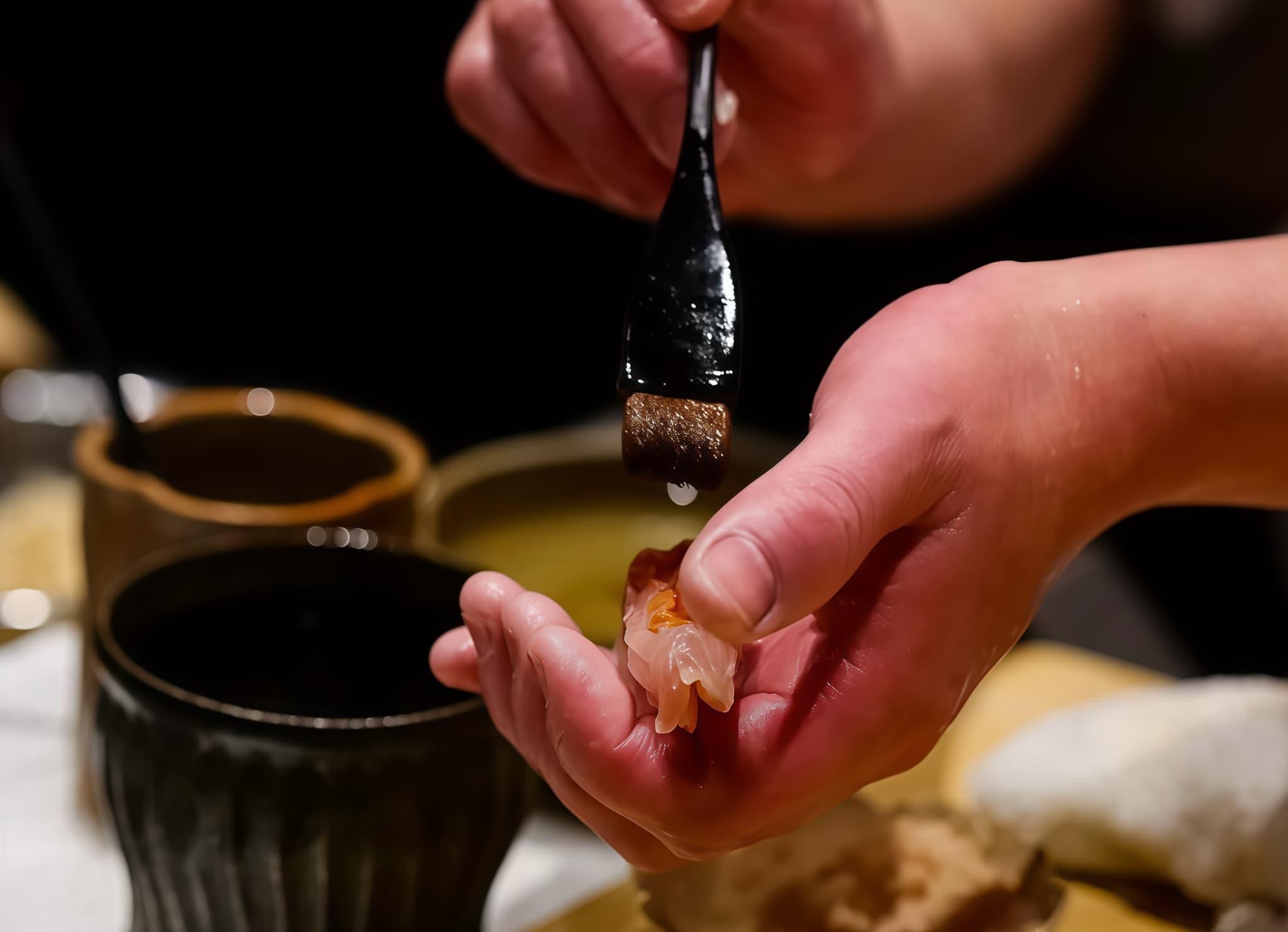
The Symphony of Three Shari Blends
Tsurigane-cho takes its name from a bell once gifted to the Shogunate, and the neighborhood still carries something of that quiet. It is not a part of Osaka that draws visitors on its own, which suits the restaurant. The entrance is in an unassuming building, the counter is on the third floor, and the seven seats face a kitchen where Eikichi Hiramatsu works without particular ceremony.
Hiramatsu spent years at Sakura Nakayama, a sake specialist, before moving to Sushi Oohata to train in the technical discipline of sushi. That sequence — sake first, then fish — is unusual enough that it shapes how the meal is constructed. The pairing logic is not applied at the end as an optional accompaniment but runs through every decision from the shari to the order in which pieces arrive. For guests who pay attention, this becomes apparent somewhere in the middle of the meal, at a point where the rice and the fish and the drink all seem to be working from the same set of assumptions.
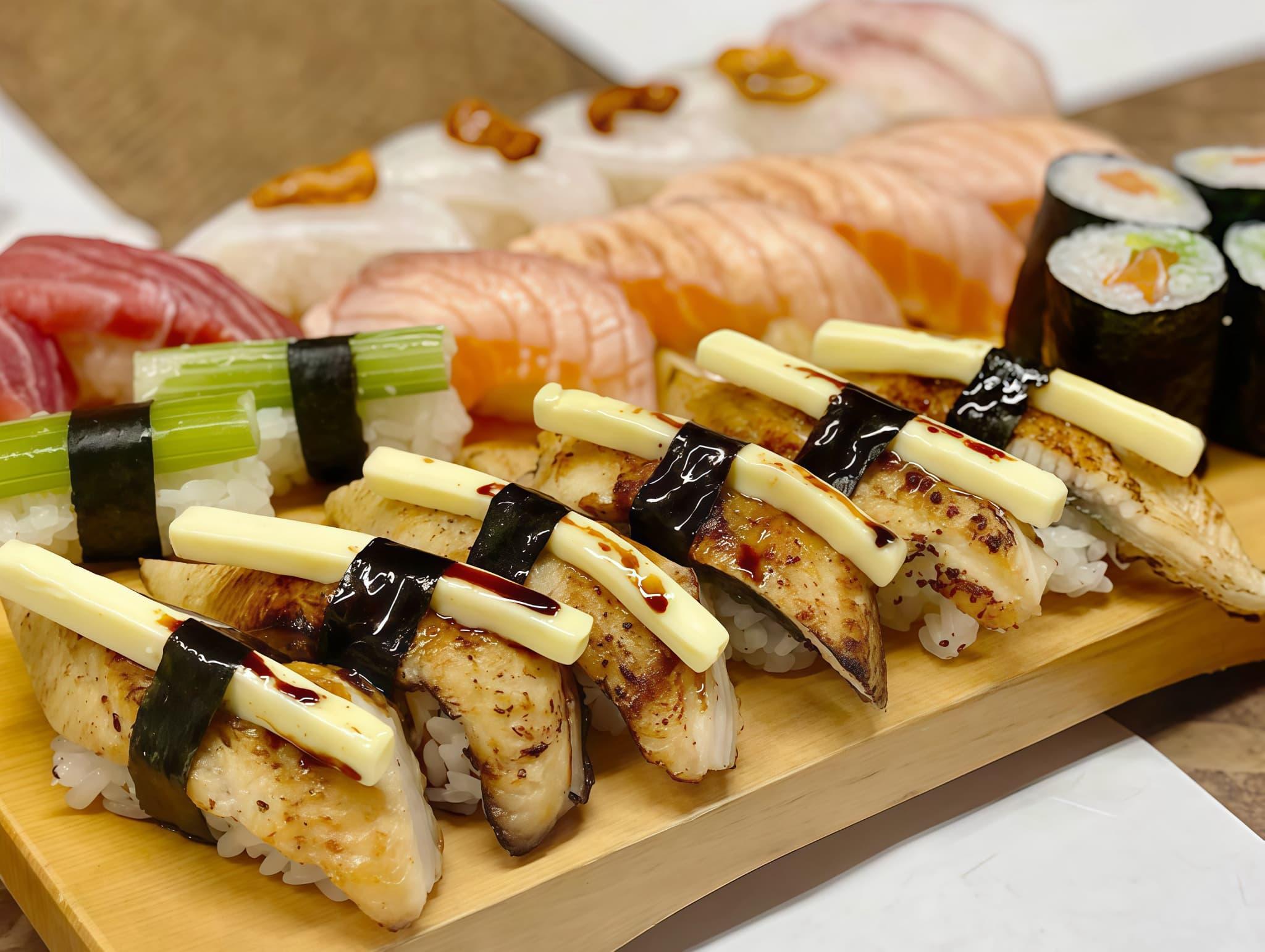
The most visible expression of that thinking is the three-shari system. For delicate white fish, Hiramatsu uses a rice seasoned with sharp acidity and no sugar, which allows the natural sweetness of the fish to come forward without anything added to it. For kohada and silver-skinned fish, a second blend sits between the two registers, versatile enough to move in either direction. For sea urchin, eel, and fatty tuna, a red vinegar-led rice with more depth and umami, which can absorb the richness of the topping without being overwhelmed by it. The grain throughout is Yukiwakamaru from Yamagata, chosen specifically for its texture and resilience. The system is inherited from the Oohata lineage, refined through Hiramatsu's own palate and his years of thinking about how rice and drink interact.
Sourcing follows the same logic of specificity rather than prestige. Bluefin tuna and kohada arrive daily from Toyosu, where the volume and variety of the market make it the right source for Edomae staples. Sea bream and squid come directly from the Akashi Strait, where the currents produce a particular firmness and freshness that Toyosu fish of the same species do not always match. Wasabi comes from a specific grower in Shizuoka, grated to order and then rested before service — a step that softens the initial sharpness into something more aromatic and sustained, less about heat and more about fragrance.
The meal opens with appetizers that show most clearly where the sake training went. The tachiuo mini-bowl is designed to be mixed at the table, the components coming together into an emulsion that settles the palate and establishes a richness before the cleaner flavors of the nigiri begin. The isaki preparation is the dish that tends to stay in the memory longest. Okra, yuzu-kosho, and a broth made from shrimp shells — ingredients that individually suggest different culinary traditions — arrive as something entirely coherent. It reads as a Japanese salsa in the loosest sense, but the reference point matters less than what it does: it is bright, layered, and specific to this kitchen in a way that a more conventional preparation would not be.
The nine-day aged chutoro arrives with the rosé shari, the extended aging having done its work quietly — concentrating the fat, evening out the texture, producing something that has less of the immediacy of fresh toro and more of a settled, considered richness. The kuruma prawn is boiled in a concentrated broth made from its own shells before serving. The logic is simple and the effect is pronounced: the flavor the cooking adds is the flavor of the prawn itself, amplified rather than supplemented.
Only seven seats are available, and the restaurant opened in December 2024. Reservations are strongly recommended. TableEX can arrange your booking directly and help secure the best available time for your visit.
Frequently Asked Questions (FAQ)
What is the accepted payment method?
Please note that Sushi Hiramatsu is a cash-only establishment. Credit cards and electronic payments are not accepted, so we kindly ask you to prepare Japanese Yen in advance for your meal.
What happens if I am running late for my reservation?
Punctuality is essential to enjoy the full sequence of the omakase course. If you are more than 30 minutes late and we are unable to reach you, your reservation may be treated as a cancellation. If you expect to be delayed, please contact us immediately. Please be aware that arriving late may result in fewer courses being served.
Is there a possibility of the price changing from the time of booking?
Yes. To ensure the highest quality, we source the finest seasonal ingredients based on daily market availability. Depending on the procurement of premium fish, the final price may increase by ¥2,000 to ¥5,000 from the estimated price shown at the time of your reservation. We appreciate your understanding of this commitment to quality.
Can you accommodate dietary restrictions or allergies?
We strive to accommodate your needs; however, we cannot always provide substitutes for same-day requests. Please provide detailed information regarding any allergies or aversions when making your request through TableEX so the chef can prepare accordingly.
How far in advance should I book?
With only seven seats at the counter, reservations fill up very quickly. We highly recommend submitting your request via TableEX at least 2 to 4 weeks in advance to secure your preferred date and time.
Overview
| Cuisine | Sushi |
|---|---|
| Area | Tenmabashi, Osaka |
| Chef | Eikichi Hiramatsu |
| Background | Sushi Oohata |
| Shari | Masterful use of red and white vinegars. |
| English support | Limited |
Courses

Dinner
Omakase
Booking fee ¥1,000
Restaurant information
| Working Hours | 18:00~ 20:30~ |
|---|---|
| Seats | 7 |
| Payment | Cash |
| Smoking | Not Allowed |
| Alcohol take-in | Not Allowed |
| Phone number | 090-6244-8446 |
| Address | 3F CONCOM Tsurigane FRONT, 2-1-6 Tsuriganecho, Chuo-ku, Osaka, Japan |
Location map

2026
October
More counters we can secure for you
Picked by the same team — similar style or nearby.