

Sukiyabashi Jiro
Tokyo
Sushi
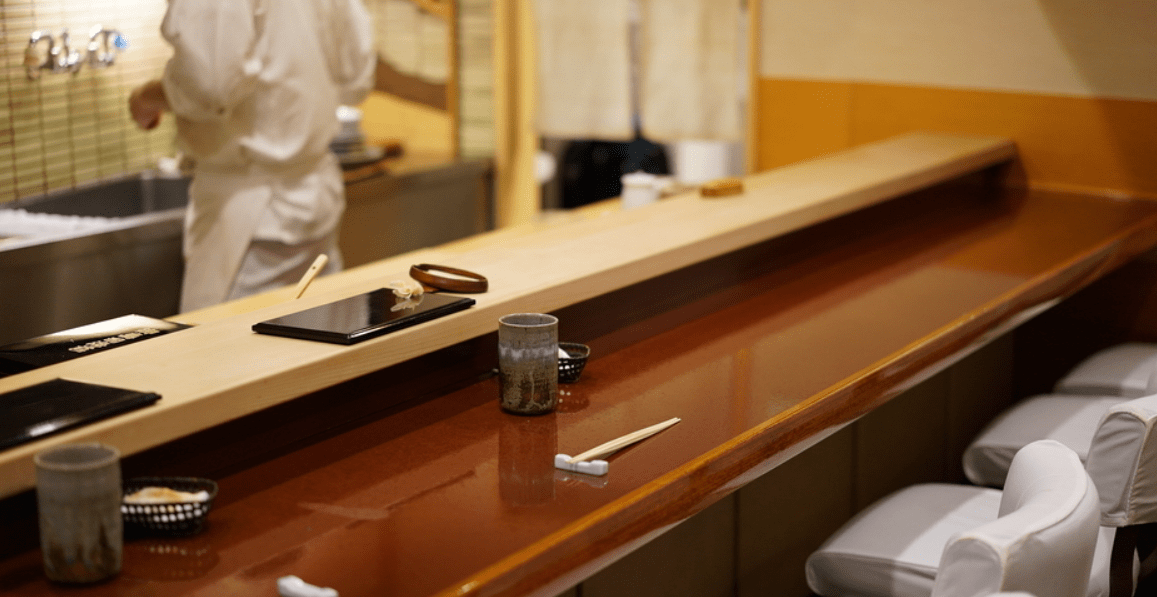
Jiro Still Dreams of Sushi
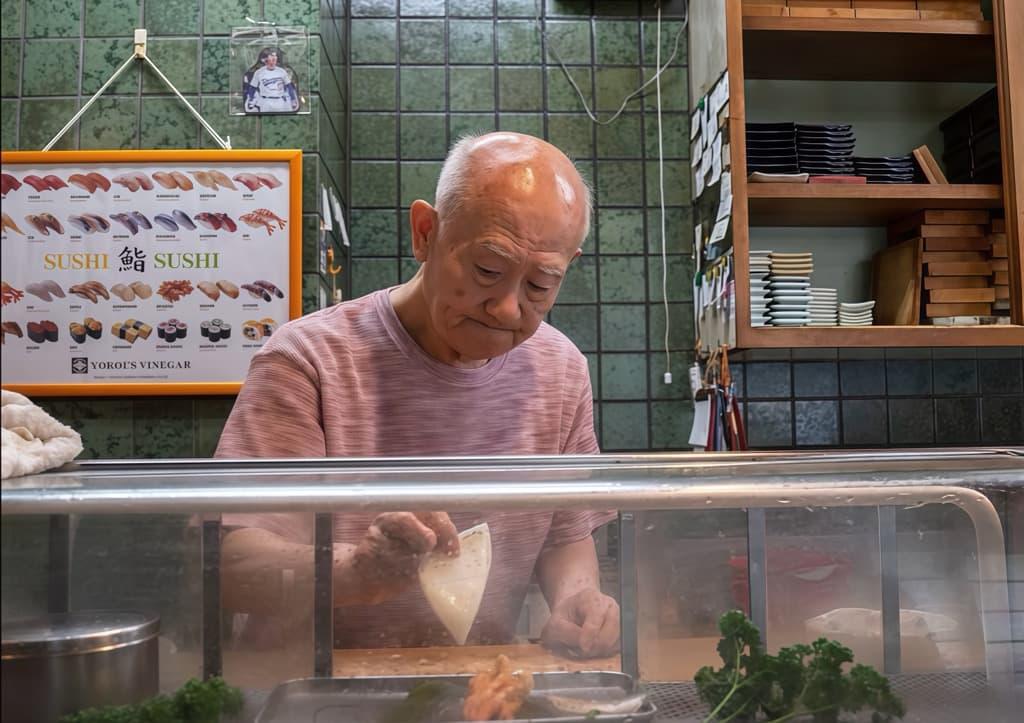
There is a joke that circulates among food enthusiasts in Tokyo. Sukiyabashi Jiro, they say, is the world's most expensive fast food restaurant. Meals are completed in thirty minutes or less. The pacing is relentless. Each piece arrives, is eaten, and is followed immediately by the next. By the time most guests have registered what they have just tasted, the following piece is already in front of them. The joke lands because it is accurate, and it is also beside the point.
What Sukiyabashi Jiro did — and what no account of the restaurant can avoid acknowledging — is return sushi to a position of cultural seriousness that it had lost. For much of the twentieth century, sushi was the kind of thing people ate casually, the way they might stop at an izakaya after work. Jiro Ono's counter in the basement of a Ginza office building changed that perception, not through marketing or a particular media moment, but through the accumulated weight of decades of uncompromising consistency. The 2011 documentary Jiro Dreams of Sushi brought international attention, but the reputation existed long before the cameras arrived.
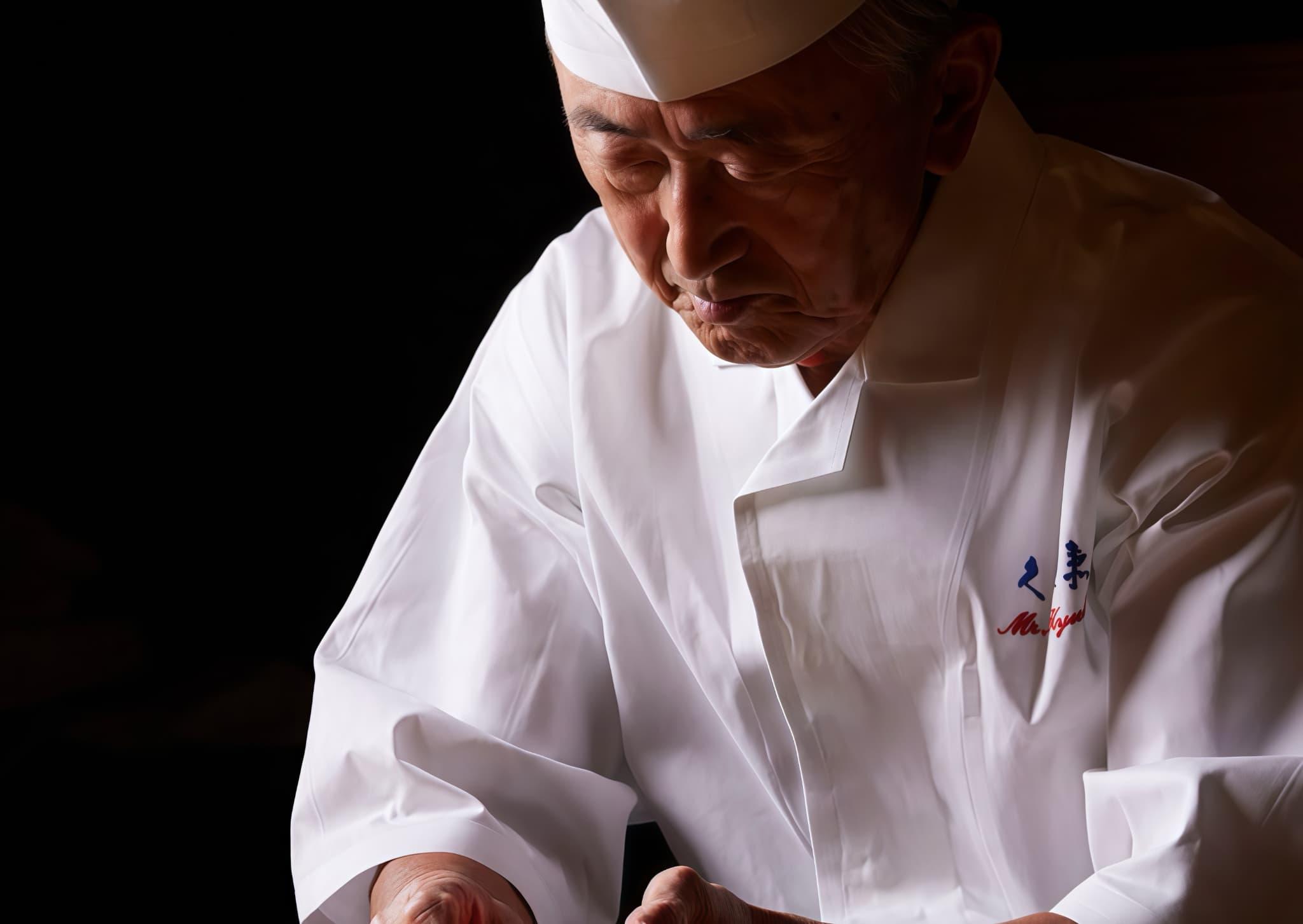
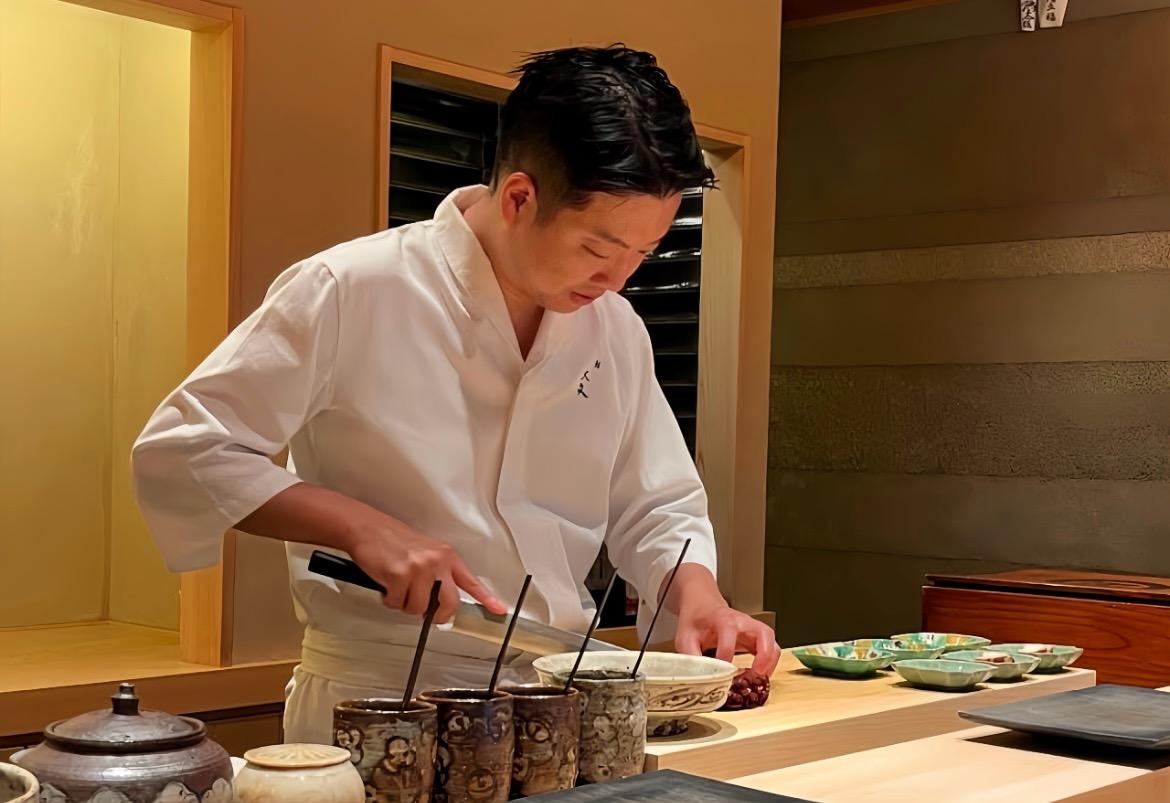
Jiro Ono was born in 1925. For decades he stood behind this counter, and guests who sat there during those years describe the experience of watching him work as one that makes the word "master" feel insufficient rather than excessive. He has since stepped back from daily service, and the counter is now led by his son, Yoshikazu Ono, who trained alongside his father for many years before taking over. The transition is less a change of direction than a continuation — the same sourcing relationships, the same standards, the same rhythm that Jiro Ono established over half a century of daily practice.
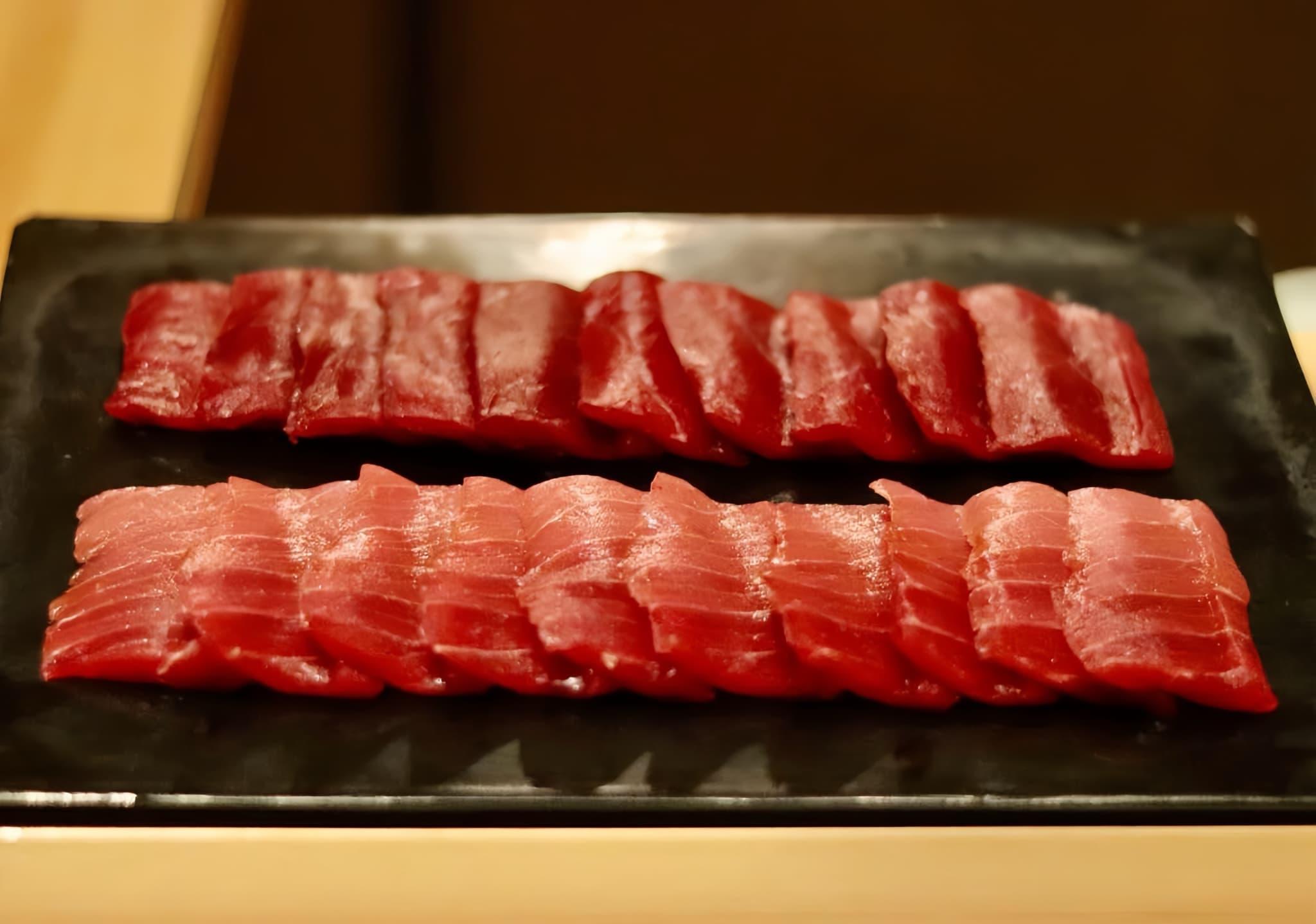
The bluefin tuna is sourced from suppliers including Fujita Shoten, one of the most respected names at Toyosu Market. The selection reflects decades of relationships built on consistency rather than occasional excellence. But the tuna, as extraordinary as it is, represents only one dimension of what the counter does. The white fish arrives with a tenderness that requires sourcing and knife work in equal measure. Japanese sardine is marinated in vinegar with a restraint that keeps the acidity alive without overwhelming the fish's own flavor — a balance that sounds straightforward and is not. Abalone is served warm, which is a deliberate choice that changes the texture and the way the flavor releases. Octopus is massaged for long enough that the chew becomes satisfying rather than resistant. Bonito is grilled over charcoal, a preparation that most sushi restaurants do not attempt because it requires a secondary skill set and additional equipment. Each of these decisions reflects a kitchen that has been making the same choices for long enough that they have become second nature rather than effort.
The course at Sukiyabashi Jiro runs to approximately twenty pieces and is completed in under thirty minutes. There is no menu, no opportunity to linger over a decision, and no pause between pieces for extended conversation. The rhythm is set by the counter and not by the guest. For diners accustomed to a more leisurely pace, the experience requires adjustment. For those who accept it on its own terms, the concentration of the meal — the way it demands full attention from the first piece to the last — produces a kind of focus that longer, more relaxed meals rarely achieve.
Reservations at Sukiyabashi Jiro are handled through hotel concierges and are not available to the general public through standard channels. TableEX can assist with the booking process for international guests. Given the restaurant's reputation and limited seating, significant lead time is required.
Sukiyabashi Jiro: Frequently Asked Questions
What does the meal consist of?
There are no tsumami (appetizers), which have become standard at most sushi restaurants today. The meal is nigiri only — approximately twenty pieces selected from the best seasonal fish available that day.
How long does the meal take?
Including dessert, the meal runs to about 30 minutes. This is precisely why Sukiyabashi Jiro is sometimes called the world's most expensive fast food restaurant.
Are drinks limited to tea?
No. Beer and cold sake are available. There is a common belief that green tea is the only acceptable drink at Jiro, but that is not the case.
Is there a dress code?
Yes. Men are encouraged to wear a collared shirt, even in summer. Shorts are best avoided.
Can you order additional pieces?
Once the course is complete, it is possible to reorder pieces you particularly enjoyed. Regulars often finish with rolls — tuna hand roll, tekkamaki, kanpyomaki — ordered after the main course has ended.
Overview
| Cuisine | Sushi |
|---|---|
| Area | Ginza, Tokyo |
| Chef | Jiro Ono |
| Background | Yoshino Honten |
| Shari | Strong acidity, Rice vinegar based |
| English support | Limited |
Courses

Dinner
Omakase course
Booking fee ¥1,000
Restaurant information
| Working Hours | 11:30 - 14:00 17:00 - 20:30 |
|---|---|
| Seats | 8 |
| Payment | Visa, MasterCard, Diners, American Express, Cash |
| Smoking | Not Allowed |
| Alcohol take-in | Not Allowed |
| Phone number | +81-3-3535-3600 |
| Address | B1F 4-2-15 Ginza Chuo-ku |
Location map

2026
October
More counters we can secure for you
Picked by the same team — similar style or nearby.