


Sushi Hashiguchi
Tokyo
Sushi
Introduction
There is a particular kind of sushi restaurant that does not try to be discovered. Sushi Hashiguchi is one of them. Toshiro Hashiguchi opened his counter in 1993, after nearly twenty years of training, and has run it with his wife ever since. He has never taken an apprentice.
The restaurant has not expanded, has not opened a second location, and has not pursued the kind of visibility that would make reservations easier to find and harder to get. What it has done, for over forty years, is make sushi in the same way, at the same counter, for guests who return with the seasons because they have found something here that they cannot find elsewhere.
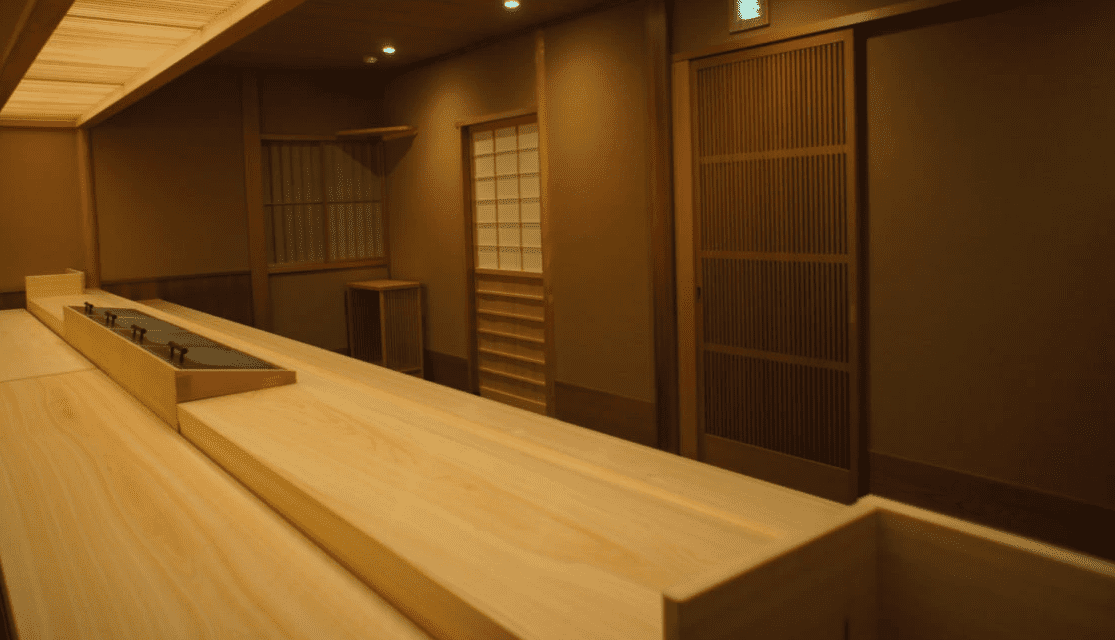
Walking in, the smell reaches you before anything else does — vinegar and rice, the particular combination that a sushi restaurant produces when the shari is being prepared and the room has absorbed years of the same process. The fish is arranged at the counter with a neatness that reflects something about the chef's state of mind before service begins. Hashiguchi is reserved and quiet in the way that people who have done one thing seriously for a very long time often are. He does not perform engagement. But the arrangement of the fish says what he would not.
Guests can choose to begin with appetizers or move directly to nigiri, depending on their mood and appetite. For those who have made the trip, the nigiri is the reason. The defining characteristic of Hashiguchi's sushi is the rice — not the fish, which is excellent, but the rice, which is the harder thing to get right and the thing that most clearly reveals the philosophy of the kitchen. The shari here is not sweet. It is smooth and refined, with a presence that does not announce itself through acidity or seasoning but simply exists as a thing with its own character. The fish is sliced slightly smaller than at many contemporary counters, which is a deliberate choice — the proportion shifts attention toward the rice and creates a balance where neither element dominates the other. The warmth of the rice is managed with the kind of precision that forty years of daily repetition produces.
This is a different approach from the counters that have come to define contemporary high-end sushi in Tokyo — the red vinegar shari, the large cuts of intensely marbled fish, the emphasis on richness and impact. Hashiguchi's sushi does not compete on those terms and does not try to. The balance he has arrived at looks simple from the outside, and the simplicity is deceptive. Many chefs who have attempted to understand and replicate it have found that the variables involved — rice temperature, vinegar ratio, the precise moment at which a piece is placed in front of the guest — interact in ways that require not months but years to calibrate. Hashiguchi himself, when asked about the secret, says there is no secret. He puts his heart into each piece, wishing for it to be delicious as he shapes it. After decades of making sushi every day, he says he still does not feel he has mastered it. That combination of complete dedication and persistent humility is either the most honest thing a chef can say or the most profound, and in Hashiguchi's case it appears to be both.
Regulars describe the experience of entering this restaurant as something close to purification — a word that sounds excessive until you have sat at the counter and understood what they mean. It is not the food alone, though the food is the occasion. It is the accumulated presence of two people who have given their working lives to a single craft and a single room, and who continue to do so without apparent diminishment of attention or care. The wife manages the room with the same quiet competence that her husband brings to the counter. Together they have created something that cannot be manufactured or replicated by a larger operation because it depends entirely on them.
Hashiguchi opened his restaurant at thirty-nine. He is now approaching eighty. The arithmetic of that is not complicated. A counter run by a single chef of this age, with no apprentices and no succession plan beyond the daily practice of continuing, is a counter that exists in a particular window of time. The sushi being made here now is the product of four decades of accumulated judgment, and that accumulation will not be available indefinitely. For guests who value what this counter represents — the long, unhurried development of a single craft by a person who has not been distracted from it — the time to visit is not eventually. It is soon.
Overview
| Cuisine | Sushi |
|---|
Courses

Dinner
Omakase Nigiri Course
Booking fee ¥1,000
Restaurant rules
Reservation requests can be accepted from 2 or more people (reservations for 1 person are not accepted) Any additional orders beyond the drinks and course menu will need to be settled by you on the day. If you are more than 10 minutes late without contacting us, we will consider it a cancellation. While there is no strict dress code, please avoid coming in shorts, sweatpants, sandals or anything along those lines.Please refrain from taking photos or videos inside the restaurant. We kindly ask that the person who made the reservation attends the appointment. Please be advised that attendance by individuals other than the reservation holder will be treated as a cancellation. Please refrain from using strong perfume, cologne, or heavily scented hair products as they may affect other customers’ experiences.
Restaurant information
| Working Hours | 18:00 - 22:00 |
|---|---|
| Seats | 8 |
| Childres | Allowed, 18 and up |
| Payment | Visa, MasterCard, Diners, American Express, Cash |
| Smoking | Not Allowed |
| Alcohol take-in | Not Allowed |
| Phone number | +81-3-3478-3588 |
| Address | 1-5-20 Motoakasaka, Minato-ku, Tokyo Tokyo |
Location map

2026
June