

Akagakiya
Kyoto
Izakaya
Kyoto’s 1949 Tavern Tradition
Akagakiya has been a reference point for Kyoto’s tavern culture since 1949. For anyone whose image of the city is limited to polished kaiseki rooms and quiet tea houses, this shop provides a different reality. It is busy, direct, and deeply connected to the everyday life of the neighborhood.
The room centers on an L-shaped counter where regulars, first-time visitors, and travelers share the same space. Bare bulbs cast a warm light, and the noise level is steady but rarely chaotic. One notable detail is the placement of mirrors along the walls. They reflect the kitchen and the oden station, allowing guests seated away from the counter to follow the movement of the chefs.
The menu is broad. Prices are not always listed, which may be unfamiliar to some visitors, but the restaurant is known for fair billing. Focusing on a few core specialties is a better approach than trying to cover the entire menu in one visit.
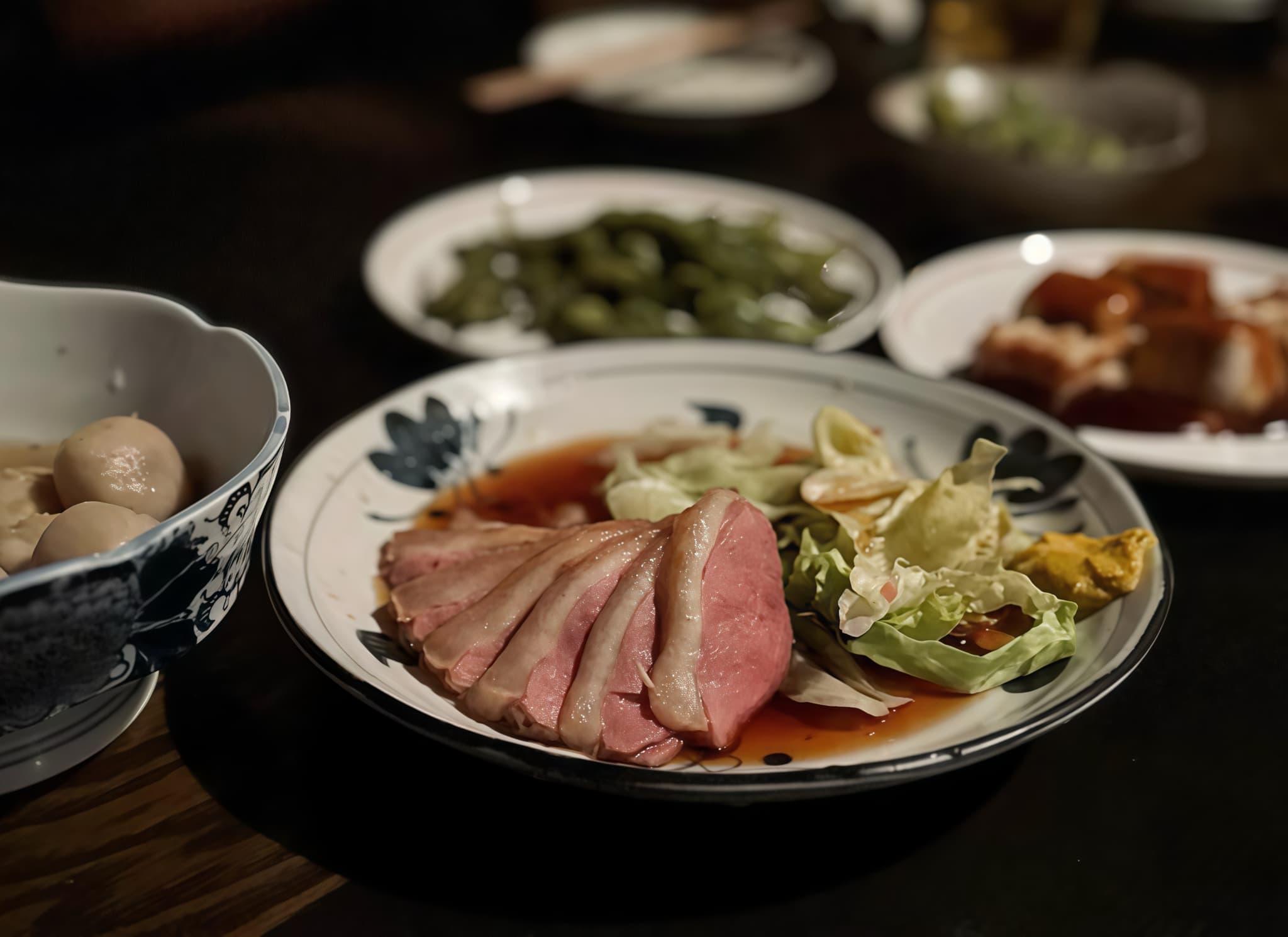
The cabbage roll is one of the more popular choices. It is simmered until the leaves break apart with a spoon, and the broth is worked deep into each layer. It is straightforward comfort food. The duck is also a reliable order. We suggest wrapping a slice of the meat with the sauce-coated lettuce and adding a generous amount of mustard. The sharpness of the mustard is necessary to balance the fat of the duck.
Shime saba is served lightly cured and topped with a large portion of fresh ginger. It works best when paired with warm sake; the heat of the drink and the oils in the fish are a natural match.
Service is fast. Dishes often reach the table within minutes of ordering, and the staff are efficient at moving the room along. The two-hour seating limit is strictly enforced. It is not a place for a long, lingering dinner, and the staff will be clear when your time is up.
Akagakiya is better suited to diners who value energy and a sense of history over privacy or luxury. It is a dense, social environment that still belongs primarily to its local regulars.
Reservations are necessary as walk-in space is limited. Booking usually requires a Japanese phone call, which we can handle through the TableEX concierge service.
Frequently Asked Questions
Akagakiya
It is extremely risky. Akagakiya is a "Holy Ground" for izakaya lovers, and tables are almost always fully booked weeks in advance. While there are 11 counter seats kept for walk-ins, people begin queuing long before the doors open at 5:00 PM. To ensure you don't spend your evening waiting on the sidewalk, advance reservation is essentially mandatory.
Yes! While the main menu is handwritten on wooden slats, the restaurant provides a simplified English menu for international guests. Furthermore, the staff are accustomed to global travelers and can communicate in basic English. Once you pass the reservation hurdle, you will find the atmosphere to be warm and accommodating.
When you order the local Fushimi sake (Meiyokan) chilled or at room temperature, it is served in a glass placed within a small saucer. The staff will pour until the sake overflows into the saucer—a traditional Japanese gesture of hospitality known as Mokkirizake. It is perfectly polite to sip from the glass first, and then pour the remaining sake from the saucer into your glass (or drink directly from the saucer if you prefer) once there is space.
One of the reasons for Akagakiya’s enduring popularity is its incredible value. Despite the premium quality of the food and the historic atmosphere, a satisfying meal typically ranges around 4,000 to 5,000 JPY per person, making it an accessible luxury for any night in the city.
Courses

Dinner
à la carte
Booking fee ¥1,000
Restaurant information
| Working Hours | 17:00 - 23:00 |
|---|---|
| Seats | 41 |
| Payment | Cash |
| Smoking | Not Allowed |
| Alcohol take-in | Not Allowed |
| Phone number | +81 75-751-1416 |
| Address | 9 Magonabashicho, Sakyo-ku, Kyoto, Japan |
Location map

2026
October
More counters we can secure for you
Picked by the same team — similar style or nearby.