Yakumosaryo
Tokyo
Kaiseki
A Sanctuary of Silence and Modern Aesthetic Awakening
Located in the serene residential enclave of Yakumo, Meguro, Yakumo Saryo is more than a restaurant—it is a portal to an altered state of being. Established in 2009, this "tea salon" serves as a cultural hub where traditional Japanese aesthetics are redefined through a contemporary lens. For international guests who may not be familiar with the intricate nuances of Japanese history, Yakumo Saryo offers a universal language of "Mindfulness." The 15-minute walk from Toritsu-daigaku Station and the passage through the manicured garden serve as a ritualistic cleansing, stripping away the noise of the city to prepare the soul for a deep, meditative experience.
This sanctuary was conceived by Shinichiro Ogata, the celebrated creative director and founder of SIMPLICITY, known for his global work with brands like Aesop. Ogata’s mission is to revive Japanese culture for the modern era. By renovating an old private estate, he created a space where the warmth of traditional Sukiya architecture coexists with stark, minimalist design. Featuring a wagashi (confectionery) shop, "Baishinka," the salon offers a progression of experiences throughout the day—from dawn breakfast to kaiseki lunch and afternoon tea—each providing a different perspective on Japanese beauty that resonates intuitively even without prior cultural knowledge.
The architecture masters the interplay of light and shadow. Plaster walls, intricate Kumiko latticework, and bamboo blinds (sudare) carefully calibrate the entry of natural light, painting ever-changing shadows across the room. The dining area, once a veranda, features expansive windows that look out onto a garden visited by seasonal birds like bush warblers and white-eyes. For the global traveler, this is a physical manifestation of Shakkei (borrowed scenery). It requires no explanation; the simple act of sitting in this space provides a profound sense of harmony between man and nature that transcends cultural boundaries.
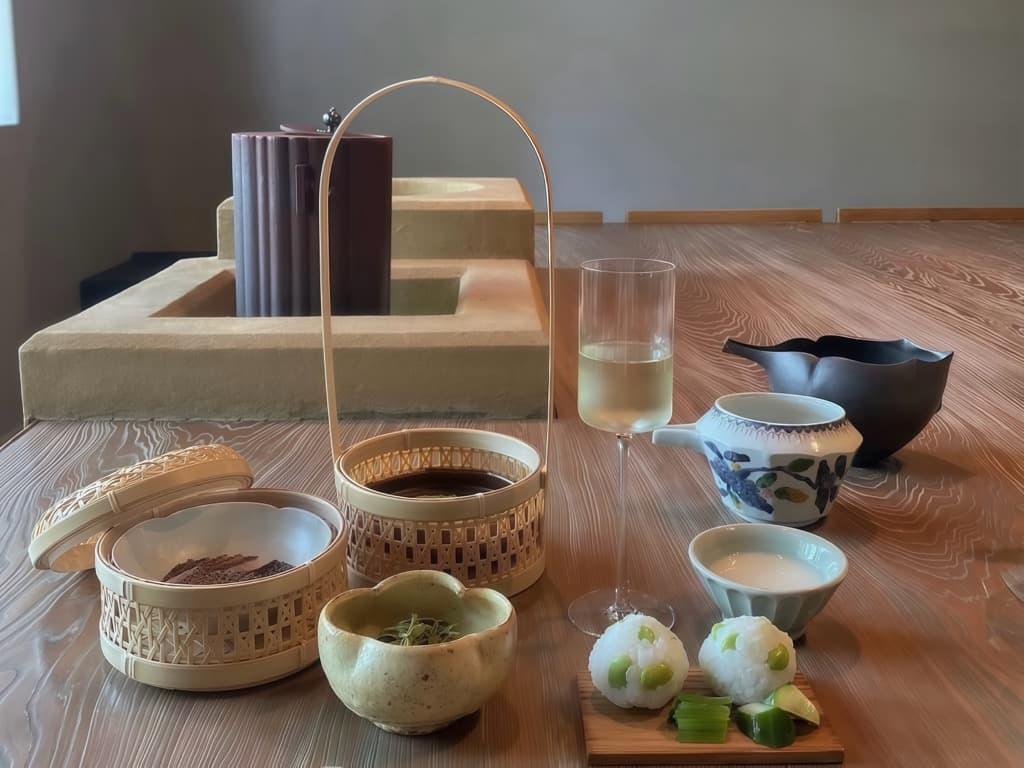
The menu is designed to introduce guests to the "essence of Japanese food" at different times of the day. The "Asacha" (Morning Tea) at 9:15 AM begins with amazake and progresses through varying consistencies of rice porridge—a luxurious way to awaken the senses. The kaiseki lunch emphasizes the inherent flavors of seasonal ingredients, while the afternoon tea service features hand-whisked matcha and seasonal wagashi. For those unfamiliar with Japanese tea ceremonies, this service is a visual performance of "Omotenashi" (hospitality), where every movement is intentional, inviting guests to rediscover the beauty of slow, mindful living.
The engineering of the flavors and the space is characterized by a reverence for nature coupled with scientific precision. From the varying textures of the morning porridge to the exact temperature control of the tea and the crystalline clarity of the dashi broth, every detail is calibrated to sharpen the guest's perception. The visual design—the way a window frame clips the view of a tree or how light reflects off a lacquer table—teaches guests the "functional beauty" of Japanese tradition. Visitors do not just consume a meal; they absorb a philosophy of balance and intentionality that informs every aspect of the service.
The craftsmanship is evident in every bite. Seasonal highlights like ayunoko (young sweetfish) or clay-pot rice with beltfish and ginger showcase the peak of Japanese terroir. The wagashi confections are often described as "edible art," featuring creative variations such as fresh ginger and brown sugar kinton. These delicate sweets represent the pinnacle of Japanese craft, telling a story of the season through color and form. Ending the meal with matcha or roasted hojicha, guests experience a flawless sequence of handiwork that leaves a lasting impression of the heights of Japanese hospitality.
Yakumo Saryo provides an unparalleled spiritual luxury in the heart of Tokyo. For international visitors, it offers a vivid encounter with the power of silence and the emotional impact of extreme attention to detail. There are no flashy performances; instead, the 2-hour experience provides the "blank space" (yohaku) necessary for inner reflection. With photography often prohibited in certain areas, guests are encouraged to record the memory with their own senses rather than through a screen. To secure a place in this masterful landscape of light and flavor, an advance reservation via TableEX is essential.
This sanctuary was conceived by Shinichiro Ogata, the celebrated creative director and founder of SIMPLICITY, known for his global work with brands like Aesop. Ogata’s mission is to revive Japanese culture for the modern era. By renovating an old private estate, he created a space where the warmth of traditional Sukiya architecture coexists with stark, minimalist design. Featuring a wagashi (confectionery) shop, "Baishinka," the salon offers a progression of experiences throughout the day—from dawn breakfast to kaiseki lunch and afternoon tea—each providing a different perspective on Japanese beauty that resonates intuitively even without prior cultural knowledge.
The architecture masters the interplay of light and shadow. Plaster walls, intricate Kumiko latticework, and bamboo blinds (sudare) carefully calibrate the entry of natural light, painting ever-changing shadows across the room. The dining area, once a veranda, features expansive windows that look out onto a garden visited by seasonal birds like bush warblers and white-eyes. For the global traveler, this is a physical manifestation of Shakkei (borrowed scenery). It requires no explanation; the simple act of sitting in this space provides a profound sense of harmony between man and nature that transcends cultural boundaries.
The menu is designed to introduce guests to the "essence of Japanese food" at different times of the day. The "Asacha" (Morning Tea) at 9:15 AM begins with amazake and progresses through varying consistencies of rice porridge—a luxurious way to awaken the senses. The kaiseki lunch emphasizes the inherent flavors of seasonal ingredients, while the afternoon tea service features hand-whisked matcha and seasonal wagashi. For those unfamiliar with Japanese tea ceremonies, this service is a visual performance of "Omotenashi" (hospitality), where every movement is intentional, inviting guests to rediscover the beauty of slow, mindful living.
The engineering of the flavors and the space is characterized by a reverence for nature coupled with scientific precision. From the varying textures of the morning porridge to the exact temperature control of the tea and the crystalline clarity of the dashi broth, every detail is calibrated to sharpen the guest's perception. The visual design—the way a window frame clips the view of a tree or how light reflects off a lacquer table—teaches guests the "functional beauty" of Japanese tradition. Visitors do not just consume a meal; they absorb a philosophy of balance and intentionality that informs every aspect of the service.
The craftsmanship is evident in every bite. Seasonal highlights like ayunoko (young sweetfish) or clay-pot rice with beltfish and ginger showcase the peak of Japanese terroir. The wagashi confections are often described as "edible art," featuring creative variations such as fresh ginger and brown sugar kinton. These delicate sweets represent the pinnacle of Japanese craft, telling a story of the season through color and form. Ending the meal with matcha or roasted hojicha, guests experience a flawless sequence of handiwork that leaves a lasting impression of the heights of Japanese hospitality.
Yakumo Saryo provides an unparalleled spiritual luxury in the heart of Tokyo. For international visitors, it offers a vivid encounter with the power of silence and the emotional impact of extreme attention to detail. There are no flashy performances; instead, the 2-hour experience provides the "blank space" (yohaku) necessary for inner reflection. With photography often prohibited in certain areas, guests are encouraged to record the memory with their own senses rather than through a screen. To secure a place in this masterful landscape of light and flavor, an advance reservation via TableEX is essential.
Courses
Morning
Breakfast
Booking fee ¥1,000
JPY5,960
(Tax Incl.)
Lunch
Lunch Omakase
Booking fee ¥1,000
JPY16,500
(Tax Incl.)
Lunch
Omakase
Booking fee ¥1,000
JPY33,000
(Tax Incl.)
Restaurant information
| Working Hours | 09:00~14:00 |
|---|---|
| Seats | 25 |
| Payment | Visa, MasterCard, Diners, American Express, Cash |
| Smoking | Not Allowed |
| Alcohol take-in | Not Allowed |
| Phone number | +81-3-5731-1620 |
| Address | 3-4-7 Yakumo, Meguroku, Tokyo Tokyo |
Location map
Request
Instant Reservation
2026
April
M
T
W
T
F
S
S
29
30
1
2
3
4
5
6
7
8
9
10
11
12
13
14
15
16
17
18
19
20
21
22
23
24
25
26
27
28
29
30