

Sen
Kyoto
Kaiseki
A Kaiseki You Come Back to
Located on Yanagibaba near Gojo, Sen is a kaiseki restaurant that has, since opening in 2018, established itself as a quietly formidable presence in Kyoto’s contemporary dining landscape. It does not position itself as a nostalgic guardian of old Kyoto, nor does it chase novelty. Instead, it occupies a clear middle ground where classical technique, modern course construction, and a strong sense of satisfaction are deliberately aligned. The result is a restaurant that feels complete rather than performative, and confident without being rigid.
The restaurant is run by Ken Sugisawa, a chef whose background includes formative years at Kikunoi and Muramachi Wakuden, where he also served as head chef. The name “Sen” itself reflects that lineage: the character combines an alternate form of his own surname with the “ku” from Wakuden, signaling respect for his training while clearly declaring independence. That attitude carries directly into the food. The cooking never attempts to deny its roots, but it also never feels bound by them. Everything is built on orthodox foundations, yet adjusted with a clear awareness of how a modern diner experiences a full course.
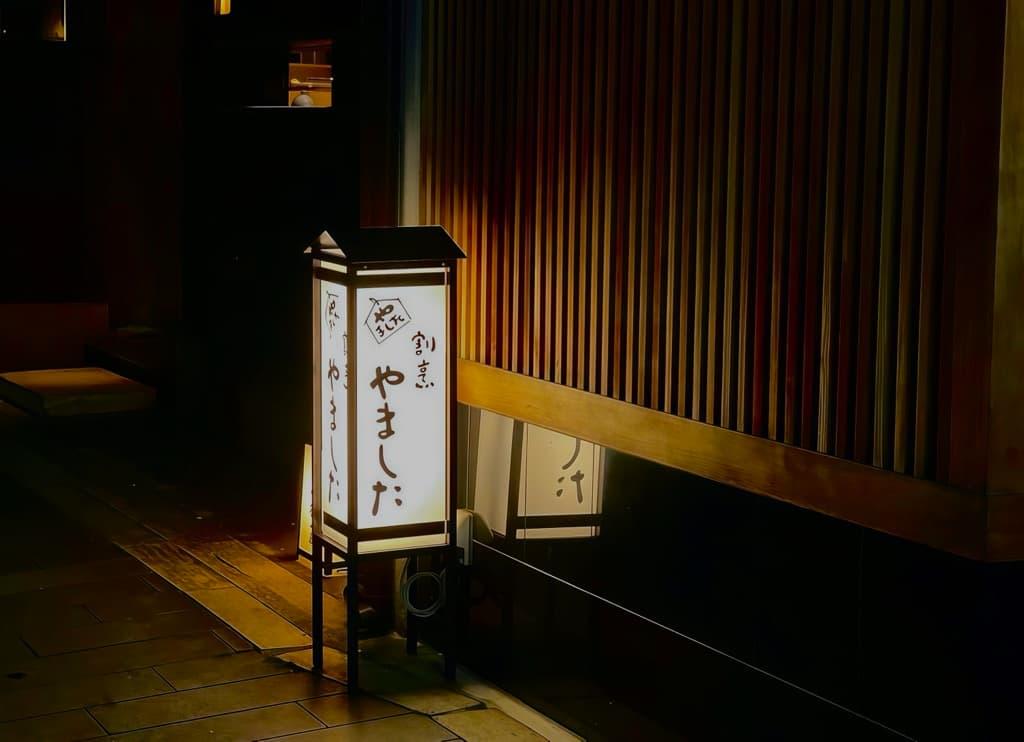
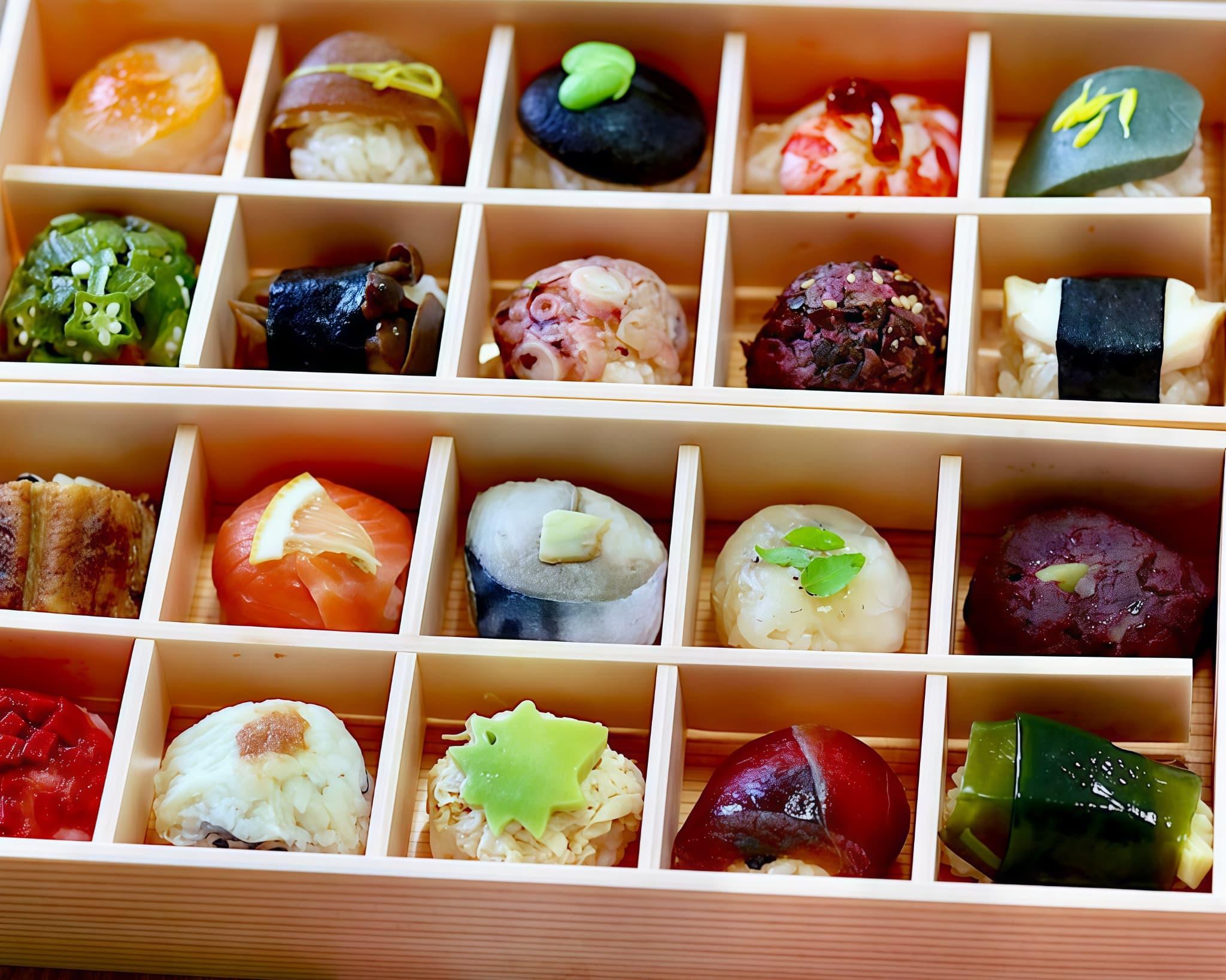
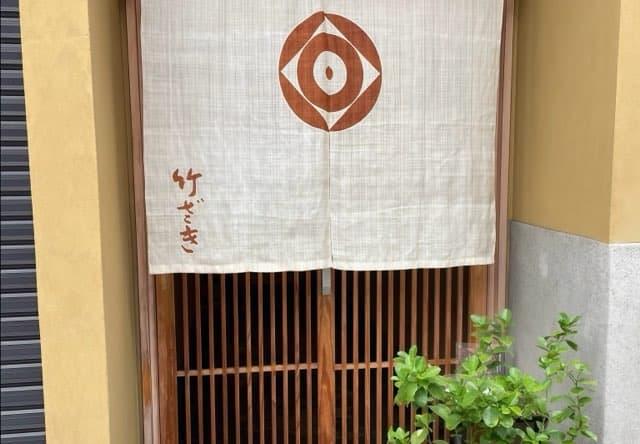
The building is a renovated traditional townhouse, and the transition from the street to the interior is immediate. The space feels composed and intentional, with clean lines, carefully chosen materials, and a counter design that avoids the familiar clichés of Kyoto kappo. Seasonal details are handled with precision. In winter and early spring, the atmosphere leans toward restraint and warmth. During the New Year period, celebratory motifs are used without hesitation—red and white accents, gold and silver elements, symbolic greenery—creating a clear sense of occasion. Rather than remaining neutral year-round, the room actively participates in setting the tone of the meal.
Sen’s defining strength lies in how the course is structured. Traditional kaiseki can sometimes drift into a uniform softness, but here the chef deliberately creates peaks and contrasts. The foundation is always dashi and seasonal produce, yet the pacing introduces clear shifts in intensity. Richness is allowed to appear, even assert itself, before being rebalanced. The presence of strong ingredients—suppon, eel, matsutake, crab, wagyu—never feels ornamental. They are placed where they serve the momentum of the course, not where tradition dictates they must appear.
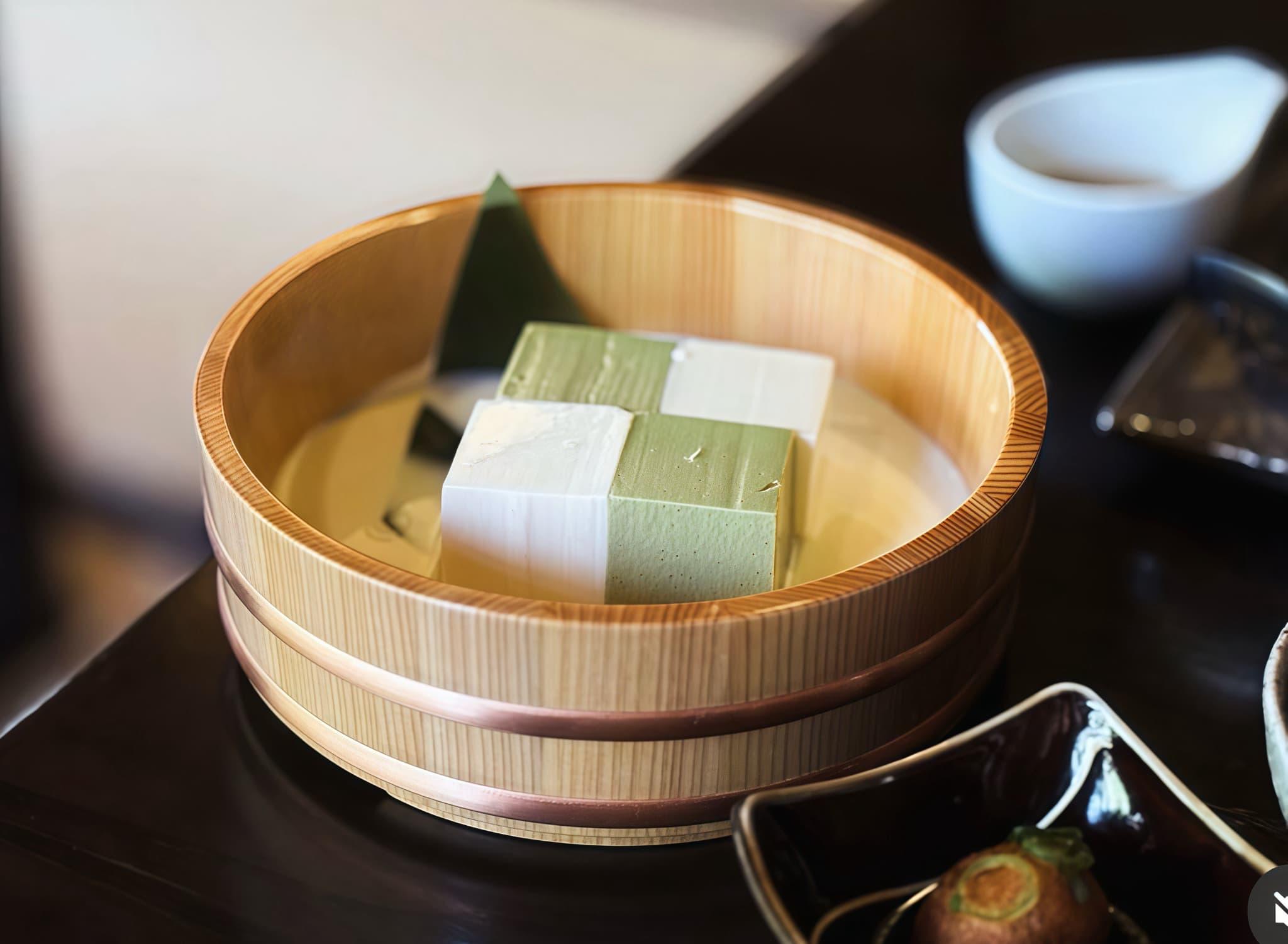
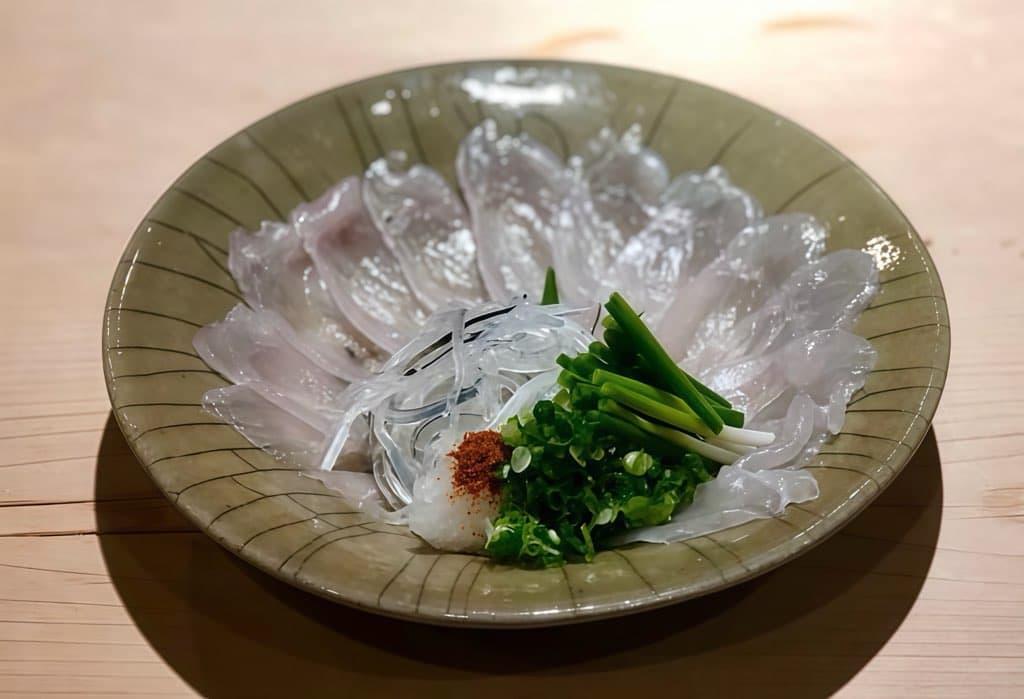
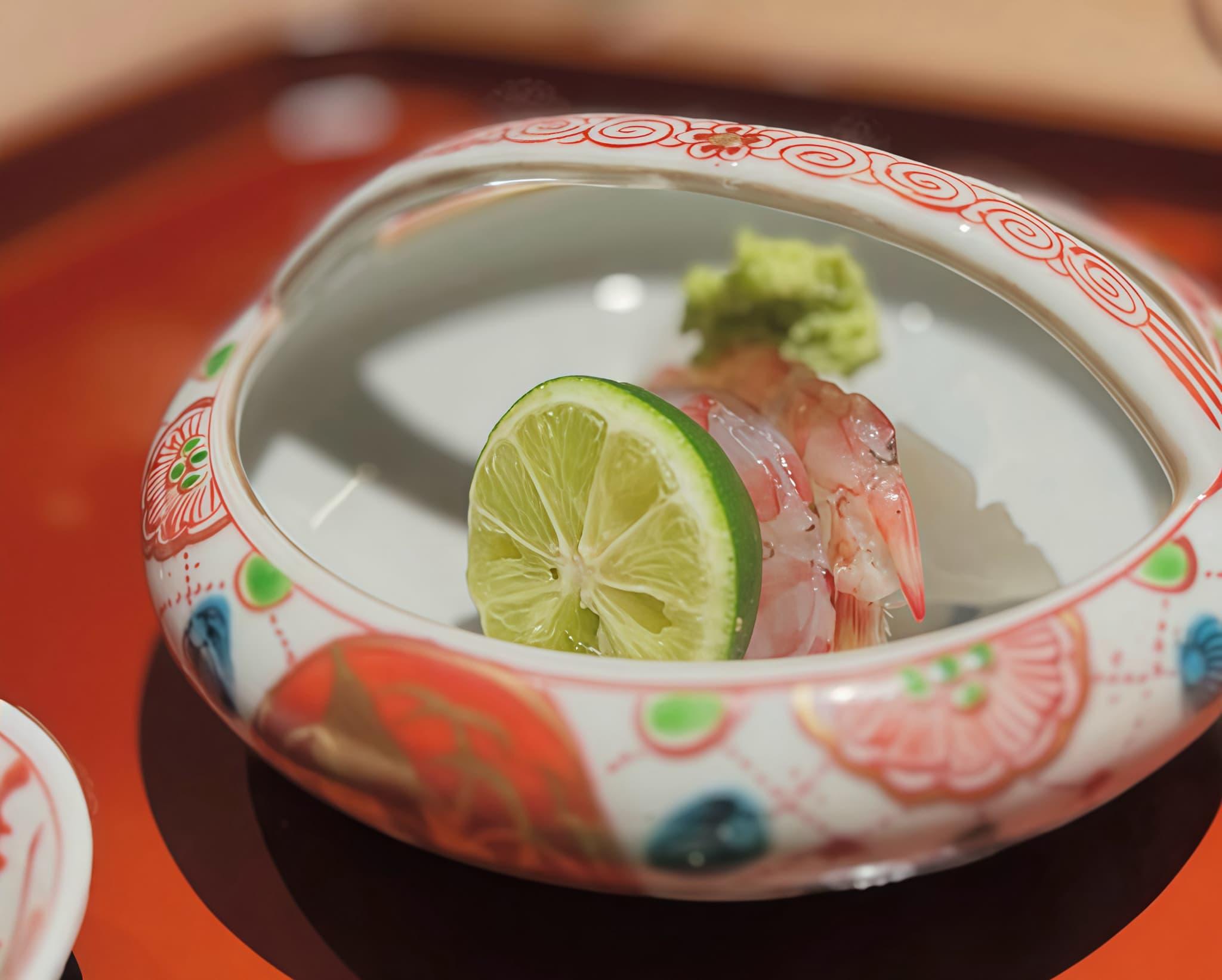
A seasonal menu may begin by establishing context rather than spectacle, then move decisively through soup, sashimi, and fried dishes before expanding outward in an expressive hassun. At New Year, celebratory symbolism is built directly into the food. A white miso soup layered with tilefish and taro announces both formality and warmth. Sashimi is arranged with intention, balancing restraint with satisfaction. Fried items—such as fugu or spiny lobster finished generously with karasumi—introduce a surge of aroma and salinity that shifts the course forward rather than interrupting it. Dishes like shark fin and suppon appear not as curiosities but as fully integrated kaiseki expressions, their depth handled with control so that richness enhances rather than overwhelms.
Lunch follows the same philosophy without dilution. Suppon chawanmushi, clear soups filled with matsutake, deep-fried prawns and mushrooms, eel prepared with confidence—nothing feels adjusted downward simply because of the time of day. The cooking remains serious, and the structure remains generous.
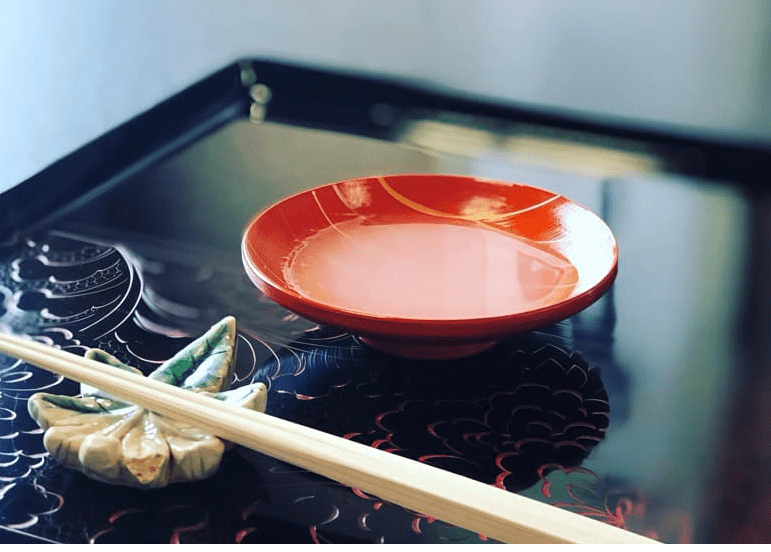
The closing phase of the meal is one of Sen’s most distinctive features. Rather than offering a single prescribed finish, the restaurant presents an unusually wide range of rice and noodle dishes. Plain rice is treated with the same respect as more elaborate options, while items such as oyster fry rice bowls, beef bound with egg, mackerel sushi, light soba, or even richer preparations push the satisfaction level higher. This is not excess for its own sake. It is a conscious choice to acknowledge appetite and pleasure as valid endpoints in kaiseki dining, rather than forcing a polite tapering off.
What Sen ultimately offers is a fully designed Kyoto dining experience—one where space, utensils, seasonal symbolism, and food all point in the same direction. The cuisine is neither minimal nor indulgent by default. Instead, it is calibrated. Each course serves a role, each shift in intensity feels intentional, and the meal concludes with a sense of completion rather than restraint.
This is a restaurant that suits diners who want to understand Kyoto kaiseki not as an abstract ideal, but as a living format capable of generosity, depth, and flexibility. Those who value structure but also want clear satisfaction, strong ingredients handled without theatrics, and a meal that builds meaningfully from start to finish will find Sen exceptionally well matched to their expectations.
Courses

Lunch
Lunch Omakase
Booking fee ¥1,000

Dinner
Dinner Omakase
Booking fee ¥1,000
Restaurant information
| Working Hours | 12:30~ 18:30~ |
|---|---|
| Seats | 7 |
| Payment | Visa, MasterCard, Diners, American Express, Cash |
| Smoking | Not Allowed |
| Alcohol take-in | Not Allowed |
| Phone number | 075-361-8873 |
| Address | 379 Shiogamacho, Shimogyo-ku, Kyoto, Japan |
Location map

2026
October
More counters we can secure for you
Picked by the same team — similar style or nearby.