

Sushi Takao
Fukuoka
Sushi
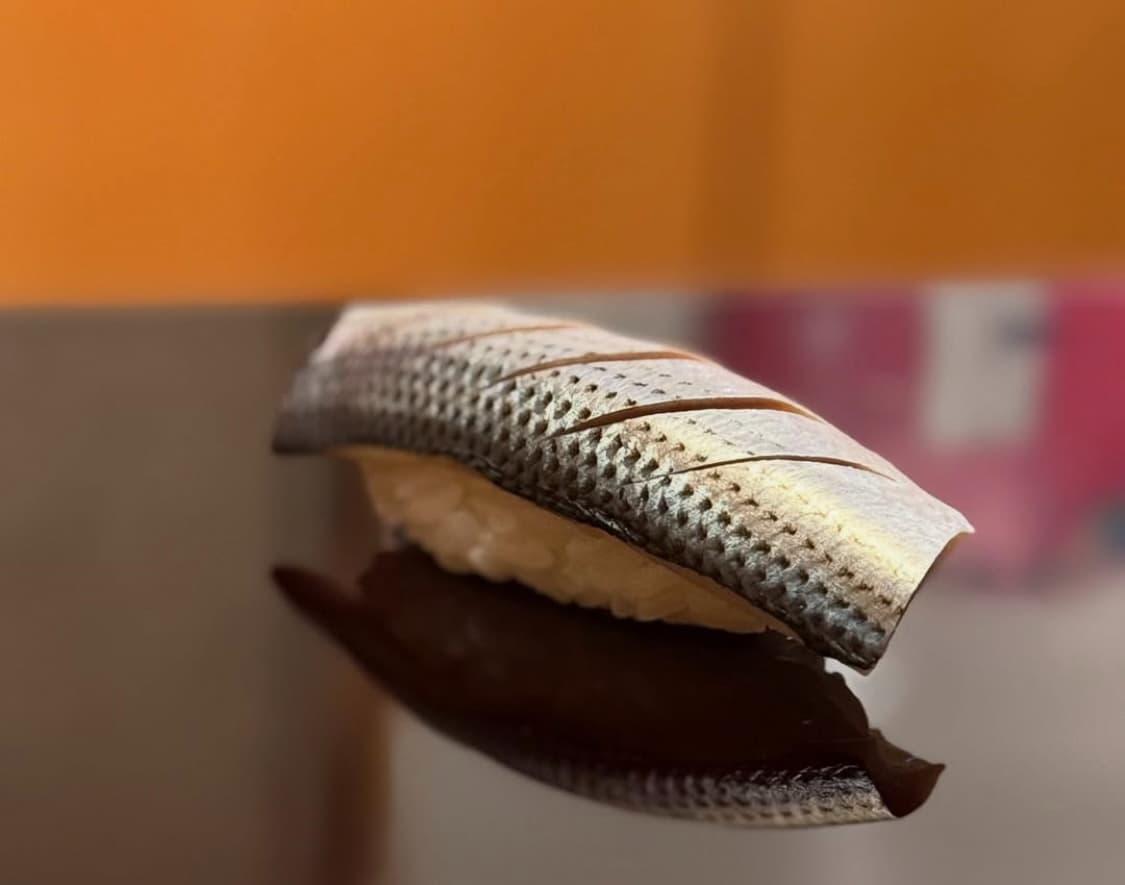
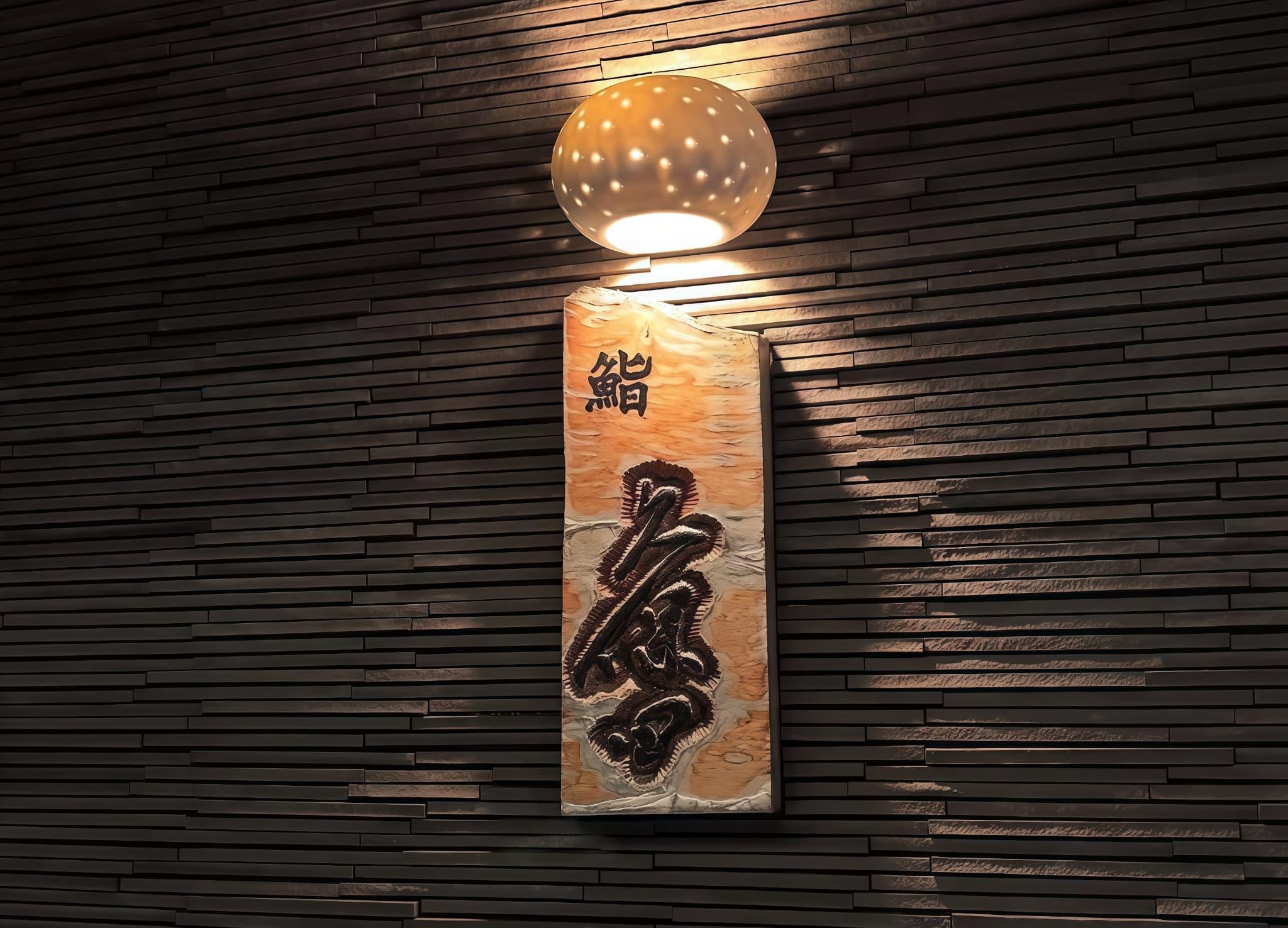
A Veteran Sushi Counter Locals Truly Trust
Fukuoka has a well-documented seafood culture — the city's proximity to the Genkai Sea and the Ariake Sea produces some of the most distinctive catches in Japan, and the local market reflects that with a depth of selection that Tokyo's Toyosu cannot always match for regional species. Sushi Takao sits within that tradition, not as a destination that announces itself, but as the kind of counter that locals return to with every season and rarely mention to visitors unless asked directly.
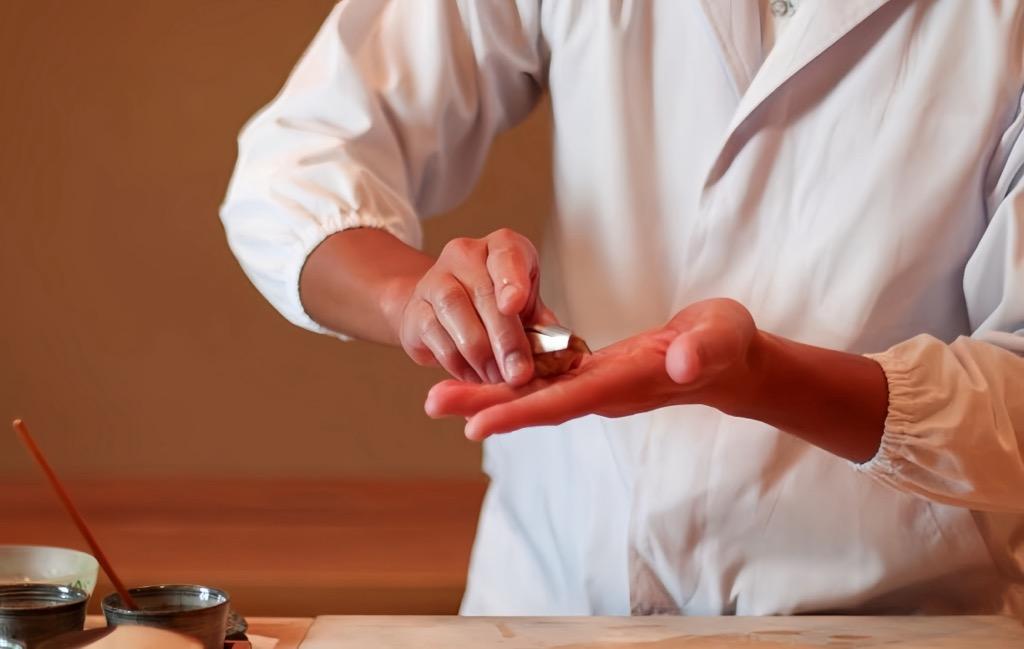
The chef is Tomohisa Takao, whose path to this counter followed a route that is more considered than typical. He trained in Tokyo under Takahisa Suzuki of Nakaku, one of the capital's respected masters, absorbing the technical foundation that serious Edomae training provides. Rather than opening immediately after that apprenticeship, he returned to Fukuoka and spent time working at a local fish market — not as a chef but as someone learning the sourcing side of the business from the inside. That decision, which delayed the opening of his own counter, produced something that purely kitchen-trained chefs rarely have: an understanding of how regional seafood behaves across seasons, which suppliers can be trusted for which species, and how quality shifts with weather and water temperature rather than just with the calendar.
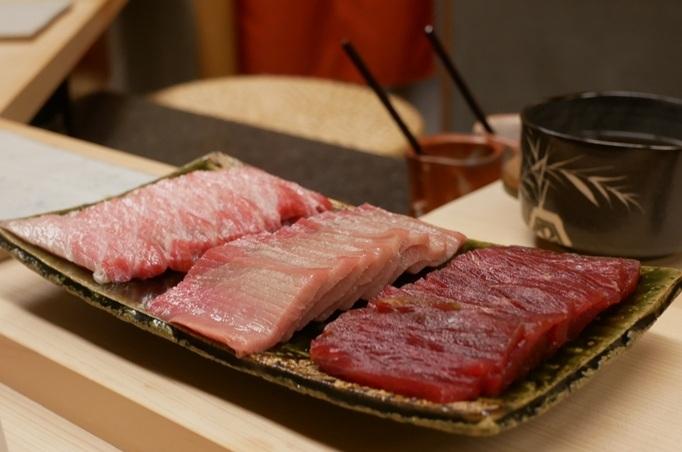
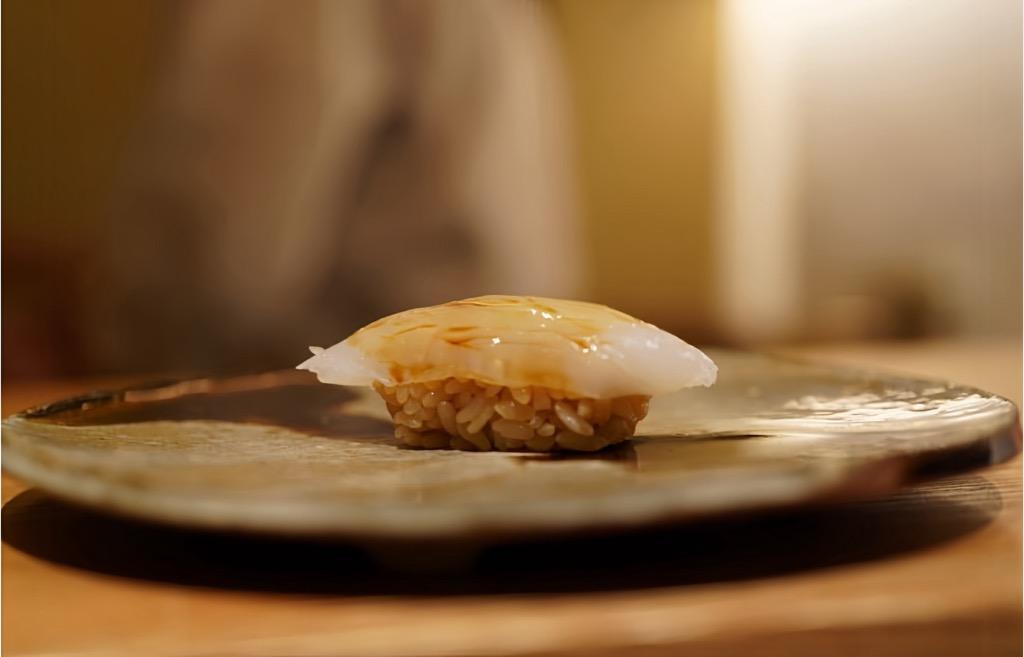
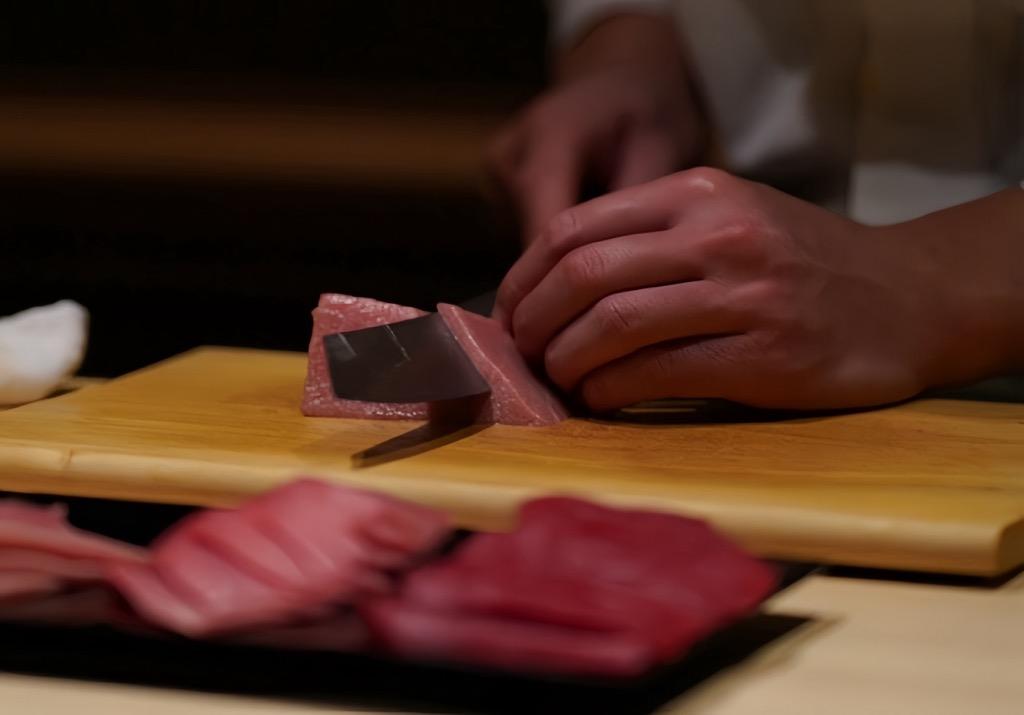
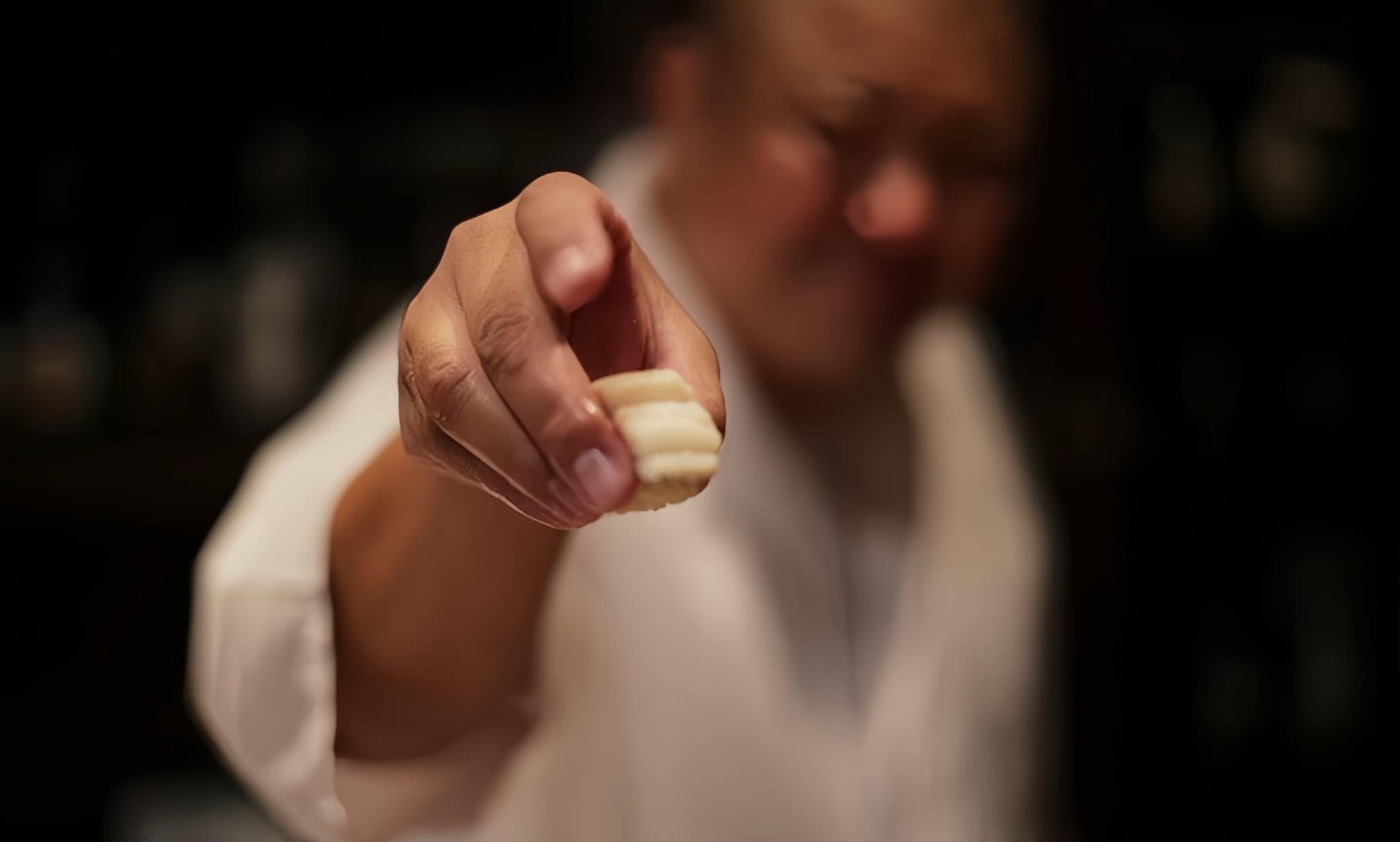
The tuna comes from Ishiji, a Toyosu-based supplier with a reputation that precedes it among serious sushi counters in Japan. The quality is consistent in the way that only long-term sourcing relationships tend to produce. But the tuna, strong as it is, is not where the counter distinguishes itself most clearly. That happens with the white fish, where Takao's market background and his understanding of local species combine with a shari that is subtle and balanced enough not to impose itself on delicate flavors. The sushi rice at many counters is seasoned to a point where it makes a statement of its own. Here it does not, and that restraint is what allows white fish preparations to reach their full expression rather than being partially obscured by the acidity beneath them.
The market connections produce occasional pieces that even regular sushi guests may not have encountered in this form. Kuchi — the flathead fish — appears in summer with a texture and aroma that the season's water temperatures produce and that refrigeration and distance would diminish. It is not a fish that travels well or stores long, which is why it rarely appears at counters far from where it is caught. Isaki, the Japanese grunt, is a species that carries a gaminess in the wrong hands — an off-note that comes from handling and timing rather than from the fish itself. Takao's preparation eliminates it without eliminating the fish's character, which requires knowing exactly where the gaminess originates and addressing it at that point rather than masking it afterward. Salt-cured amadai, the tilefish, develops a mochi-like bounce through the curing process that fresh amadai does not have — the salt drawing moisture from the flesh and changing its texture in a way that makes the piece memorable in a register that has nothing to do with richness or fat.
The counter is now shared between Takao and his son, who recently completed his own training at Nihonbashi Kakigaracho Sugita in Tokyo — one of the most demanding apprenticeships available in contemporary Japanese sushi. The generational transfer happening at this counter is worth noting. The son brings current technique from one of Tokyo's most respected kitchens. The father brings forty years of accumulated judgment about Fukuoka's specific seafood and the relationships that give access to it. What that combination produces over the next decade will be interesting to watch.
For visitors to Fukuoka who are accustomed to seeking out known names and published rankings, Sushi Takao presents a different kind of case. The counter does not appear prominently in international coverage, and the regulars who fill it each season have not been particularly eager to change that. The quality, however, is not quiet about what it is.
Overview
| Cuisine | Sushi |
|---|---|
| Area | Tenjin, Fukuoka |
| Chef | Tomoyuki Takao |
| Background | Nakata in Ginza |
| Shari | Mild acidity, Red vinegar based |
| English support | Limited |
Courses

Dinner
Omakase
Booking fee ¥1,000
Restaurant rules
Please refrain from wearing strong fragrances, including perfumes, fabric softeners, or scented sprays, when visiting the restaurant. Substitutes are not accepted. The guest who made the reservation must attend in person. Guests with extensive allergies or dislikes that affect two or more dishes in the course may have their reservation treated as a cancellation. Depending on the timing of the notice, the cancellation policy may apply.
Restaurant information
| Working Hours | 17:00 - 22:30 |
|---|---|
| Seats | 7 |
| Payment | Visa, MasterCard, American Express, Cash |
| Smoking | Not Allowed |
| Alcohol take-in | Not Allowed |
| Phone number | +81-92-711-7711 |
| Address | 15-4 Watanabe-dori 5-chome, Chuo-ku, Fukuoka-shi, Fukuoka, Japan Fukuoka |
Location map

2026
July
More counters we can secure for you
Picked by the same team — similar style or nearby.