

Soba Osame
Tokyo
Soba Udon
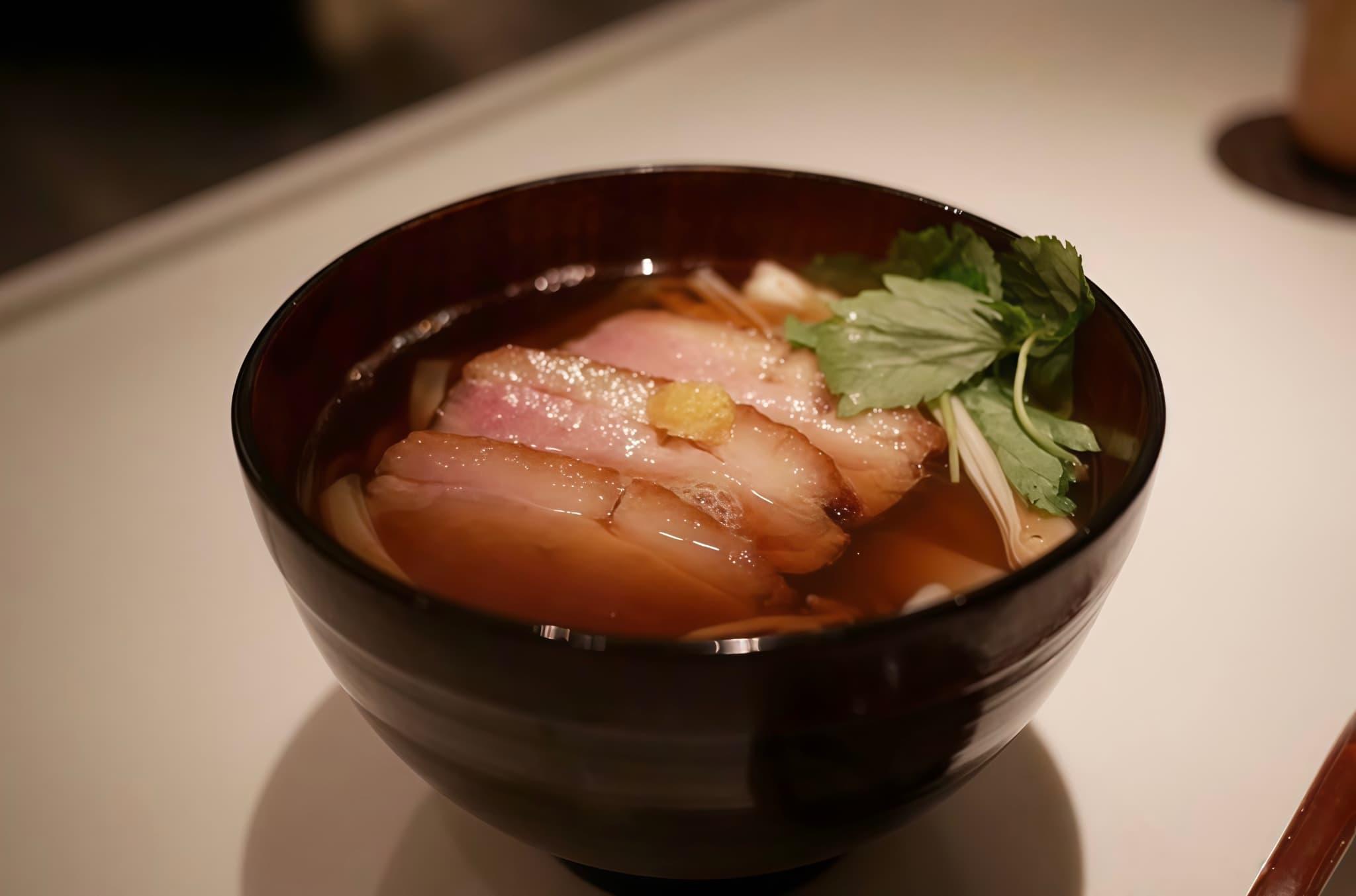
The Soba House That Treats Buckwheat Like Terroir
Soba Osame has quietly redefined the Tokyo soba landscape since its anticipated relocation to a century-old historic house in Mejiro in 2023. This move from its former cult-favorite spot in Nishi-Azabu seems to have completed Chef Kenji Osame’s vision of bringing soba back to its roots, both literally and spiritually, offering international guests a rare encounter with Japan’s indigenous zairai-shu buckwheat.
Tucked in a quiet residential area just minutes from Mejiro Station, the approach itself sets the tone: a narrow gravel path lined with stepping stones and soft lantern light leading to a stately wooden entrance. Inside, polished floors open onto tatami rooms and a small courtyard garden with stone basins and lanterns—refined yet deeply nostalgic, the kind of setting that instantly slows time.
Osame trained at several renowned soba houses including Takeyabu and Okawaya before striking out on his own. Early in his career, he encountered zairai-shu—Japan’s indigenous, non-hybrid buckwheat varieties—and was captivated by their character. Ever since, he has devoted himself to crafting soba made exclusively from these native grains. Each region’s soba has its own personality, shaped by its soil and climate, and Osame treats each as a voice worth hearing.
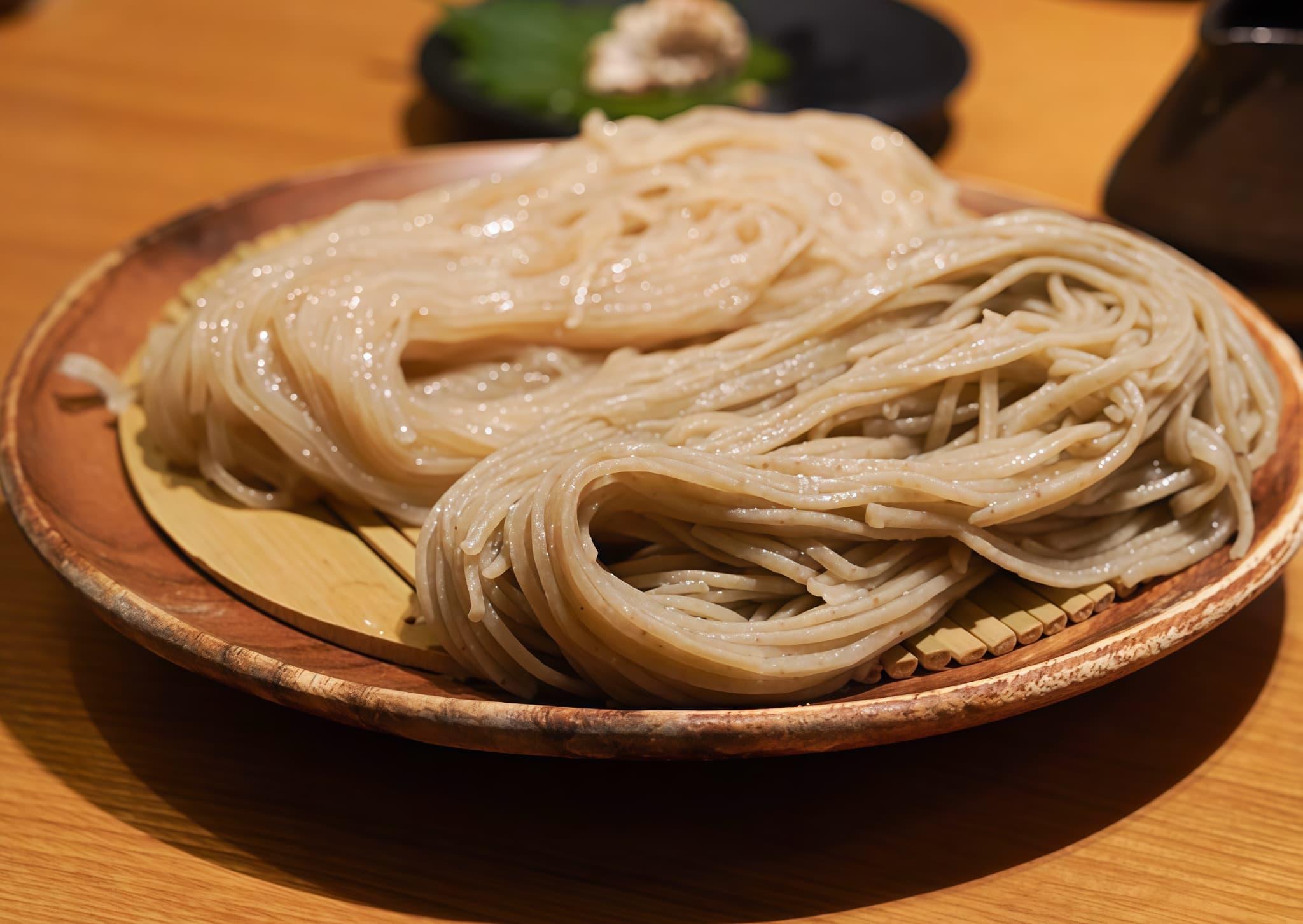
Three styles are served daily: seiro, the clean and classic expression; arabiki, coarsely milled for a rustic depth; and genbiki, ground whole with the husk still intact. The last is Osame’s signature. While whole-grain soba is often rough or heavy, his is supple and elegant, with an aroma so vivid it fills the air before the plate lands. He mills the buckwheat himself on a stone wheel, slowly and patiently, to draw out sweetness without bitterness. The noodles are then boiled with micro-adjustments for temperature and humidity, and cooled to just the point where the fragrance blossoms.
The experience is multisensory: the gentle grain scent, the sound of boiling water, the faint earthy perfume that evokes rural Japan more than central Tokyo. Each bite has a faint chew, a refined finish, and a purity of flavor that lingers. It’s a rare balance—country soul and urban precision in the same bowl.
Complementing the soba are small dishes that show Osame’s technical finesse. Herring simmered for three days until the bones soften, chicken grilled in koji and soy, tiger prawns marinated in Saikyo miso, and a perfectly folded tamagoyaki made in a copper pan, subtly seasoned with dashi. The sake list, curated by the team, favors small producers and seasonal bottles that pair naturally with soba’s nutty aroma.
Osame continues to experiment quietly, adjusting even the temperature of the rinsing water depending on the guest or the weather. “When it’s warmer, I tighten it a little colder; when it’s cool, I leave it slightly warm so the fragrance opens faster,” he says. These small decisions, invisible to the guest, make a difference you can feel but not name.
Few places in Tokyo capture soba’s original essence with such clarity. Soba Osame is not nostalgic—it’s living tradition, expressed through a chef who understands restraint and patience as deeply as technique. In a century-old house filled with quiet light and the scent of fresh buckwheat, Osame’s soba reminds you that simplicity, done this well, can still astonish.
Tucked in a quiet residential area just minutes from Mejiro Station, the approach itself sets the tone: a narrow gravel path lined with stepping stones and soft lantern light leading to a stately wooden entrance. Inside, polished floors open onto tatami rooms and a small courtyard garden with stone basins and lanterns—refined yet deeply nostalgic, the kind of setting that instantly slows time.
Osame trained at several renowned soba houses including Takeyabu and Okawaya before striking out on his own. Early in his career, he encountered zairai-shu—Japan’s indigenous, non-hybrid buckwheat varieties—and was captivated by their character. Ever since, he has devoted himself to crafting soba made exclusively from these native grains. Each region’s soba has its own personality, shaped by its soil and climate, and Osame treats each as a voice worth hearing.
Three styles are served daily: seiro, the clean and classic expression; arabiki, coarsely milled for a rustic depth; and genbiki, ground whole with the husk still intact. The last is Osame’s signature. While whole-grain soba is often rough or heavy, his is supple and elegant, with an aroma so vivid it fills the air before the plate lands. He mills the buckwheat himself on a stone wheel, slowly and patiently, to draw out sweetness without bitterness. The noodles are then boiled with micro-adjustments for temperature and humidity, and cooled to just the point where the fragrance blossoms.
The experience is multisensory: the gentle grain scent, the sound of boiling water, the faint earthy perfume that evokes rural Japan more than central Tokyo. Each bite has a faint chew, a refined finish, and a purity of flavor that lingers. It’s a rare balance—country soul and urban precision in the same bowl.
Complementing the soba are small dishes that show Osame’s technical finesse. Herring simmered for three days until the bones soften, chicken grilled in koji and soy, tiger prawns marinated in Saikyo miso, and a perfectly folded tamagoyaki made in a copper pan, subtly seasoned with dashi. The sake list, curated by the team, favors small producers and seasonal bottles that pair naturally with soba’s nutty aroma.
Osame continues to experiment quietly, adjusting even the temperature of the rinsing water depending on the guest or the weather. “When it’s warmer, I tighten it a little colder; when it’s cool, I leave it slightly warm so the fragrance opens faster,” he says. These small decisions, invisible to the guest, make a difference you can feel but not name.
Few places in Tokyo capture soba’s original essence with such clarity. Soba Osame is not nostalgic—it’s living tradition, expressed through a chef who understands restraint and patience as deeply as technique. In a century-old house filled with quiet light and the scent of fresh buckwheat, Osame’s soba reminds you that simplicity, done this well, can still astonish.
Courses

Lunch
Soba Tasting Course
Booking fee ¥1,000
JPY5,500
(Tax Incl.)

Dinner
Soba Tasting Course
Booking fee ¥1,000
JPY9,900
(Tax Incl.)
Restaurant rules
Substitutes are not accepted. The guest who made the reservation must attend in person.
Restaurant information
| Working Hours | 11:30 - 14:30 17:30 - 21:00 |
|---|---|
| Seats | 20 |
| Payment | Visa, MasterCard, Diners, American Express, Cash |
| Smoking | Not Allowed |
| Alcohol take-in | Not Allowed |
| Phone number | 050-5487-7701 |
| Address | 3-21-5 Shimoochiai, Shinjuku-ku, Tokyo, Japan |
Location map
Request
Instant Reservation
2026
October
M
T
W
T
F
S
S
27
28
29
1
2
3
4
5
6
7
8
9
10
11
12
13
14
15
16
17
18
19
20
21
22
23
24
25
26
27
28
29
30
31
Checking request availability…
Checking request availability…
More counters we can secure for you
Picked by the same team — similar style or nearby.