


14 Elite Sushi Counters in Tokyo Led by Alumni of the City’s Top Shops
Last Edit: 2026.04.02
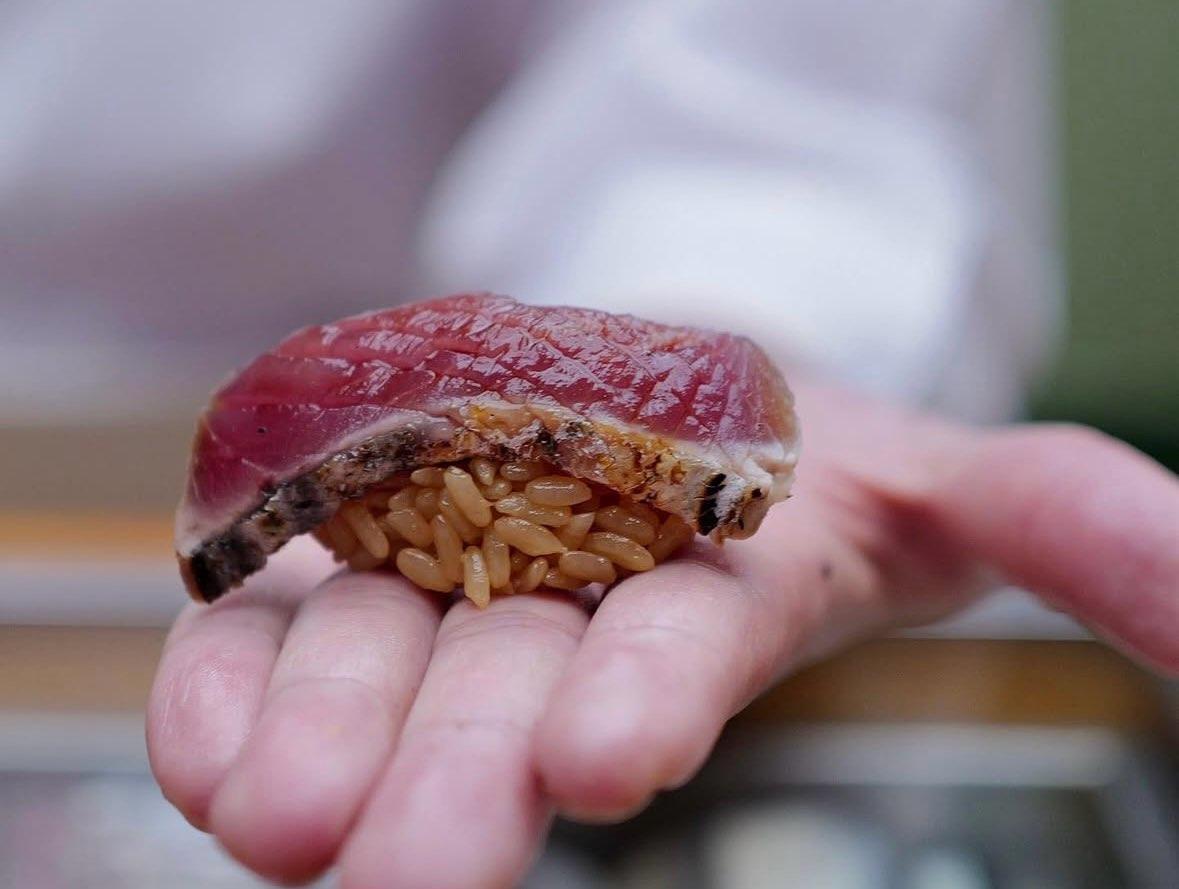
Hello from the TableEX editorial team. Somewhere along the way, every journey became about the next plate to be discovered. That’s how deeply this team has fallen for the pursuit of good food — an obsession that can no longer be hidden. Among all the world’s cuisines, sushi feels like one of humanity’s purest achievements, where craft and ingredient are refined to their absolute essence. Each visit to a counter brings the quiet thrill of witnessing that pursuit at its peak. This time’s theme: “Graduates of the Masters — Chefs Entering Their Prime.” Featured here are sushi masters who trained at Tokyo’s most respected counters and, after gaining independence, have steadily honed their skills. Having moved past their rookie years, they now stand ready to shape Tokyo’s sushi scene for the next decade — and beyond. To watch them at work is to see tradition and innovation cross paths in perfect balance. For those seeking to understand both the now and the next of Tokyo sushi, this list is the place to start. The chefs featured here are not chasing trends; they are quietly defining the future.
1. Sushi Ishiyama
Opened in 2018 by Takao Ishiyama, a veteran of Ginza’s elite Kanesaka and Saito, Sushi Ishiyama is a destination for those who appreciate quiet craftsmanship over flash. Tall and composed, Ishiyama says little—but every movement behind the counter speaks volumes. His shari (sushi rice) is a blend of rice vinegar with just a touch of red vinegar for nuance, cooked firm to preserve grain texture. The sushi follows a classic Edomae lineup—Maguro(tuna), Kohada(gizzard shad), Anago(sea eel), and Ebi(shrimp)—executed with calm precision and no shortcuts. One seasonal favorite is his pressed Saba(mackerel)sushi, wrapped in white kombu and paired with crisp nori. Simple, restrained, and deeply satisfying. Sushi Ishiyama doesn’t chase trends or media attention. It’s a place for purists, delivering graceful, textbook Edomae sushi in the heart of Ginza. In a city packed with talent, it stands out quietly—and confidently.

2. Sushi Suzuki
Opened in 2015, Sushi Suzuki has quietly established itself as one of Ginza’s most reliable sushi destinations. Chef Takahisa Suzuki trained for 12 years at the renowned Sushi Aoki before opening his own place at age 40. His shari (sushi rice) is seasoned with a gentle blend of red vinegar, offering a soft acidity and delicate saltiness. Each grain retains texture while still melting in the mouth—a sign of refined technique. The neta (the ingredients) focus on Edomae staples like Kohada(gizzard shad), Kuruma ebi(Japanese tiger prawn), and Hamaguri(clam), with seasonal additions such as Shiro Amadai(tilefish)and Kue(longtooth grouper). His winter-only saba battera (pressed mackerel sushi) is a cult favorite. With a balanced omakase that includes both tsumami and nigiri, Sushi Suzuki offers a quietly confident experience that reflects deep craftsmanship. It may not grab headlines, but it wins loyal fans—one thoughtful dish at a time.
3. Sushi Takeru
Opened in 2022, Sushi Takeru is quickly making a name for itself in Ginza’s competitive sushi scene. Chef Takeru Watanabe trained at top restaurants like Kanesaka, Arai, and Ryujiro, and brings over a decade of elite experience to his own counter. His shari is boldly seasoned with red vinegar and salt, showing strong influence from Sushi Arai. Tuna is sourced from Yamayuki, and the lineup features Edo-style classics like Kohada(gizzard shad)and Hamaguri(clam)alongside signature items like a generous toro-taku roll and a finely minced cucumber roll that’s a hit with younger guests. Despite the upscale setting, Takeru brings a relaxed and friendly energy that puts diners at ease. His technique is precise, the ingredients are top-tier, and the vibe is inviting. For those seeking refined sushi without the stiffness, Sushi Takeru is a standout new entry in Ginza.
4. Sushi Masashi
Opened in 2020 by Masashi Yamaguchi, a disciple of Rei Masuda, Sushi Masashi quickly made its mark with a Michelin star in its second year. Yamaguchi brings a fresh sensibility to the classic Edo-style techniques passed down from the Sukiyabashi Jiro lineage. His omakase blends refined nigiri with inventive small plates. A standout is the sukiyaki-style tuna cheek, simmered in soy sauce and paired with a rich Okukuji egg yolk—simple, soulful, and addictive. The shari (sushi rice) uses Kinsho red vinegar for depth without overwhelming color, and the tuna, sourced from Yamayuki, delivers remarkable aroma and texture. Other highlights include wild eel from Shimane, shirakamadai(tilefish)from Oita, and anago(sea eel)from Tsushima. After relocating to a more serene space near Omotesando in 2025, Sushi Masashi now offers an even more focused, elegant experience. For those seeking creativity grounded in tradition, this spot is a quiet but confident standout.
5. Sushi Oya
Opened in 2023, Sushi Oya has quickly drawn attention as one of Tokyo’s most promising new sushi counters. Chef Yoji Oya, who spent nearly ten years honing his craft at the former three-star Sushi Yoshitake, brings a distinctive international sensibility to traditional Edomae sushi. Having been born in Chicago and raised between Bangkok and Beverly Hills, his worldview subtly informs both his technique and hospitality. The otsumami courses reveal remarkable precision and creativity: oyster rice scented with scallion oil and sesame, grilled pen shell accented with aonori and bonito flakes, and abalone steamed for six hours and served with its own velvety liver sauce. To conclude, the remaining abalone sauce is folded into red shari, creating a deeply flavorful finale that lingers long after the meal ends. Chef Oya prepares two kinds of shari, adjusting each to complement the character of the neta. His marinated tuna is sourced from Ishiji, one of Toyosu Market’s most trusted suppliers. Seasonal touches such as squid infused with white birch sap or anago finished with herbal syrup show his playful yet precise approach. Calm and charismatic behind the counter, Oya moves easily between English and Japanese, putting every guest at ease. Sushi Oya stands out as a confident, contemporary interpretation of Edomae tradition—a quietly dazzling new destination in Kagurazaka.
6. Fudomae Sushi Iwasawa
Among the many restaurants in the Sushi Sho lineage, Sushi Iwasawa stands out for its warm hospitality and well-crafted omakase. Owner Motoyuki Iwasawa left a career as a systems engineer to pursue sushi, inspired by a part-time job he held in college. He began training at 25 and brings a gentle, approachable presence to the counter. Fluent in both English and Chinese, Iwasawa is especially welcoming to international guests. His shari (sushi rice) blends red and white vinegar, and the course follows the signature Sushi Sho rhythm of alternating tsumami and nigiri, typically offering over 30 bites in a single sitting. In autumn, the omakase might include kombu-cured Shiroebi(white shrimp), soy-marinated Buri(yellowtail), or chawanmushi with Matsutake mushrooms. The variety is seasonal, thoughtful, and deeply satisfying. This isn’t quite an “izakaya-style sushi” spot, but it offers a relaxed, sake-friendly experience that works just as well for couples, families, or groups of friends. Sushi Iwasawa is one of the most dependable and enjoyable spots for casual fine sushi dining in Tokyo.
7. Sushi Mizukami
After sixteen years of training at both the main and Roppongi branches of Sukiyabashi Jiro, Michinobu Mizukami opened his own restaurant in Tokyo—and the result is everything you’d expect from someone so deeply rooted in the Jiro tradition. His technique is razor-sharp, his discipline unwavering, and his omakase lineup rivals the very best in the city. The shari is seasoned only with rice vinegar, in line with Jiro’s style, though Mizukami softens the salt level for better balance with white fish. Tuna comes from rising star wholesaler Yunoka, while his white fish is sourced from the famed Koichi Mura, a master of ikejime. Kohada(gizzard shad)and Saba(mackerel)are textbook perfect—cleanly prepared and seasoned to match the rice in both texture and flavor. Mizukami still serves 18 to 20 pieces of nigiri per course, a rarity these days, offering a sushi-first experience that purists will deeply appreciate. With the retirement of Jiro Ono, Sushi Mizukami stands as one of the most faithful and refined successors to that legendary lineage.
8. Sushi Yuki
Sushi Yuki offers a pure, unadorned journey into the heart of traditional Edomae sushi. Chef Yuki Hayashinouchi stands as the sole direct apprentice of the late Hachiro Mizutani, the revered master behind the now-closed Sushi Mizutani—a name once spoken in the same breath as Jiro Ono of Sukiyabashi Jiro. Among Tokyo’s sushi community, Hayashinouchi commands deep respect for his technique and for preserving the quiet dignity of the classic sushi craftsman, a spirit that has become increasingly rare today. Three qualities define Sushi Yuki: an omakase experience devoted entirely to nigiri, a philosophy that lets the shari take center stage, and a shari style shaped by the chef’s own intuition and balance. Here, the shari (sushi rice) is seasoned with a blend of several rice vinegars, creating a bright acidity underpinned by a refined salinity. The flavor opens gradually, harmonizing beautifully with the umami of each neta. For tuna, Hayashinouchi sources from Yunoka, a supplier highly regarded by the new generation of sushi chefs. His white fish come straight from a skilled fisherman in the Setouchi region, known for impeccable ikejime handling. This combination of trusted purveyors and an unwavering focus on simplicity reflects his quiet pride in the craft. Many younger chefs see him as a mentor figure—someone who embodies the ideals of the sushi world they aspire to. If he continues on this trajectory, Sushi Yuki may soon stand among Tokyo’s defining Edomae institutions, much as Harutaka does today. And considering his lineage in the prestigious Jiro school, being able to experience a full omakase here for under 30,000 yen feels like an extraordinary privilege. For any serious sushi traveler in Tokyo, this is a destination not to miss.
9. Ebisu Endo
In Tokyo’s sushi circles, Norifumi Endo of Ebisu Endo has earned a reputation as a true obsessive—some peers even call him a “maniac.” Yet within the community, that word carries admiration, not mockery. Endo’s devotion to his craft runs deep. After rigorous apprenticeships at two of Japan’s most venerated counters—Sushi Mizutani in Ginza and Sushi Saito—he forged his own path built on precision and principle. Endo’s sourcing reads like a map of Japan’s finest waters and producers: Managatsuo (silver pomfret) caught by Mr. Fujimoto in Ehime, Mehikari (greeneye fish) introduced through Sushi Ito in Fukushima, wild Unagi (eel) from Lake Shinji, and Kampachi (greater amberjack) supplied by Mr. Kushimoto in Wakayama. Each ingredient is chosen not for rarity alone but for the integrity of the person behind it. His cooking emphasizes coaxing out natural flavor rather than masking it with excess seasoning. A prime example is his Donko shiitake—deep-fried slowly for two hours, then kissed by charcoal heat until the surface crisps and the interior releases waves of umami aroma. The shari (sushi rice) is cooked on the firm side, giving each grain a clean snap. Its mild vinegar and salt profile allows the character of the neta to take center stage. In an unconventional move, Endo reverses the typical tuna order: rather than saving Otoro (fatty tuna) for last, he serves it first. “Like yakiniku,” he says, “the richest cuts shine brightest when you still have appetite and focus.” Before his sushi career, Endo played professional soccer in the UK—an unexpected past that explains both his fluent English and global perspective. That background, combined with his technical mastery, makes Ebisu Endo one of the few sushi experiences in Tokyo where foreign guests can engage directly and meaningfully with the chef himself. Just minutes from Shibuya and open for lunch as well, it’s a rare counter that bridges world-class craftsmanship with genuine approachability—a must-visit for anyone eager to explore the depth and diversity of Japan’s seafood traditions.
10. Sushi Oumi
After years as the trusted right-hand man at Sushi Kanesaka, Hidenosuke Oumi opened Sushi Oumi in 2020—a quiet, refined counter where his craftsmanship finally takes center stage. The shari (sushi rice) is seasoned with red vinegar from Yokoi Brewing, delivering a soft yet clear acidity that balances well with all kinds of neta (the ingredients). Oumi carefully manages every detail, from grain texture to temperature, ensuring perfect harmony between rice and topping. His Edomae-style sushi is traditional but never rigid. Kohada(gizzard shad)is topped with white kelp, Meichidai(golden threadfin bream)comes with ume paste, and Katsuo(bonito)is gently smoked after a light soy cure—elegant touches that show both confidence and restraint. Nicknamed “Sanpei” by those who know him, Oumi creates a relaxed atmosphere rare in high-end sushi. For a quietly personal take on Ginza sushi, Sushi Oumi is a hidden gem worth seeking out.
11. Sushi Take
Takeuchi Fumie stands as one of Japan’s leading female sushi chefs—a rare figure in a world long dominated by men. After eight rigorous years of training at Shinbashi Shimizu, one of Tokyo’s most respected Edomae sushi shops, she opened Sushi Take in Ginza in 2014. What started as a quiet experiment has since evolved into a beloved, mature establishment with a loyal following. Her sushi reflects the spirit of her mentor: bold red vinegar shari with firm grains and a sharp edge that pairs perfectly with classic neta. Rather than chasing the most expensive fish at the market, Takeuchi puts her trust in technique. Her tuna, sourced from the rising star supplier Yuno Hana, is excellent, but it’s the time-tested classics that shine—Kasugo(young sea bream)marinated in kombu, Kohada(gizzard shad)with a tight vinegar cure, salt-steamed Awabi(abalone), and Hamaguri(clam)prepared with textbook finesse. Sushi Take has grown steadily over the past decade. What once felt like a bold new venture now carries the presence of a seasoned Ginza counter. The room is calm, the service assured, and behind it all is a chef whose movements are confident but never showy. You sense the years of quiet dedication in every detail. When it first opened, the headlines focused on Takeuchi’s gender. Today, that no longer matters. What draws people now is simply the quality of the sushi. For those seeking an honest, grounded experience in the heart of Ginza, Sushi Take is more than worth a second look.
12. Sushi Miura
Sushi Miura is one of those quietly brilliant places that hasn’t yet become a buzzword among sushi fanatics—but it should. Chef Kenta Miura brings a rare depth of experience, having trained for over a decade at Kyoto’s legendary kaiseki restaurant Kikunoi, followed by a year at the cult-favorite Sushi Namba. His omakase course is shaped not only by sushi technique but by a deep understanding of Japanese cuisine as a whole. The tsumami are especially impressive—more like what you’d expect from a high-end kappo. A clear dashi broth subtly infused with gyokuro tea. Managatsuo (silver pomfret) grilled and garnished with yuzu, scallions, and ginger. Each bite is elegant, balanced, and quietly expressive. The shari strikes a classic tone with its blend of red and rice vinegars. Chewy yet airy, and served at the perfect warmth, it forms a clean backdrop for the carefully sourced neta. Miura has a long-standing relationship with Okecho, a respected Toyosu tuna wholesaler from his Kikunoi days, and the tuna reflects that pedigree with rich, unmistakable flavor. In summer, one signature stands out: ayu (sweetfish) nigiri made from live fish delivered fresh each morning. A rare treat that fuses Miura’s roots in Kyoto with his current mastery of Edomae technique. Sushi Miura was recently named a Michelin Selected restaurant, and deservedly so. It’s not flashy, not trendy—just deeply sincere, quietly excellent sushi that makes you want to come back with each passing season.
13. Shimbashi Tsuruhachi
Behind a discreet noren in Shimbashi, Tsuruhachi continues one of Tokyo’s quietest but most respected Edomae lineages. The six-seat counter is led by Hirokazu Igarashi, direct disciple within the Tsuruhachi school and junior to Kunihiro Shimizu of Shimbashi Shimizu. His approach is restrained and exacting—no theatrics, only mastery through control. The otsumami signals intent: firm, saline Awabi (abalone) steamed to amplify savoriness; Kohada (gizzard shad) layered with wasabi and gari for brightness; Hirame (flounder) tightened lightly in kombu; and Tako (octopus) tender yet resilient. Nigiri follows, the neta cut generously to overhang the shari (sushi rice). The rice, seasoned with gentle rice vinegar and salt, is served warm and breaks apart naturally. Highlights include evenly cured Saba (mackerel) with a clean aftertaste, large-cut Kohada balanced in acidity, and abundant Uni (sea urchin) that towers confidently above the gunkan without collapse. The meal ends with the signature Honmaguro (bluefin tuna) roll—thick tuna slices rolled with seasoned rice and crisp nori, pure and decisive in flavor. Courses range from nigiri-only to full omakase, all unified by precision in salt, vinegar, and temperature. Shimbashi Tsuruhachi may appear modest, but its perfection lies in balance and quiet conviction—Edomae sushi distilled to its essence.
14. Tomidokoro
Among sushi insiders, Koji Sato of Tomidokoro is often mentioned alongside Keita Aoyama of Sushi Keita — both standard-bearers of serious, classic Edomae. After training at Sushi Shin in Nishi-Azabu, Sato opened Tomidokoro in 2018 at just 31. Since then, his counter has become a quiet favorite among chefs and regulars who appreciate traditional technique done without shortcuts. Sato’s strength lies in simmered and vinegared neta. He can make summer Kohada(gizzard shad)taste decisive, and still serves old-school pieces like simmered ika that almost never appear in modern omakase. His shari, seasoned with red vinegar and cooked in a hagama pot, has bright acidity and breaks softly, giving even generous portions a surprisingly light feel. He selects ingredients himself every morning — not always the top-priced fish, but pieces chosen for balance and condition. Houbou(gurnard), Amaebi(sweet shrimp), shimesaba(vinegared mackerel), and the occasional uncommon catch show how he builds a course around what’s truly good that day. At 25,000 yen, Tomidokoro offers one of the most compelling value-for-money Edomae experiences in Tokyo. If you want honest, precise sushi rooted in tradition rather than theatrics, this is the counter to book.