


All About Ginza Kyubey
Last Edit: 2026.07.09
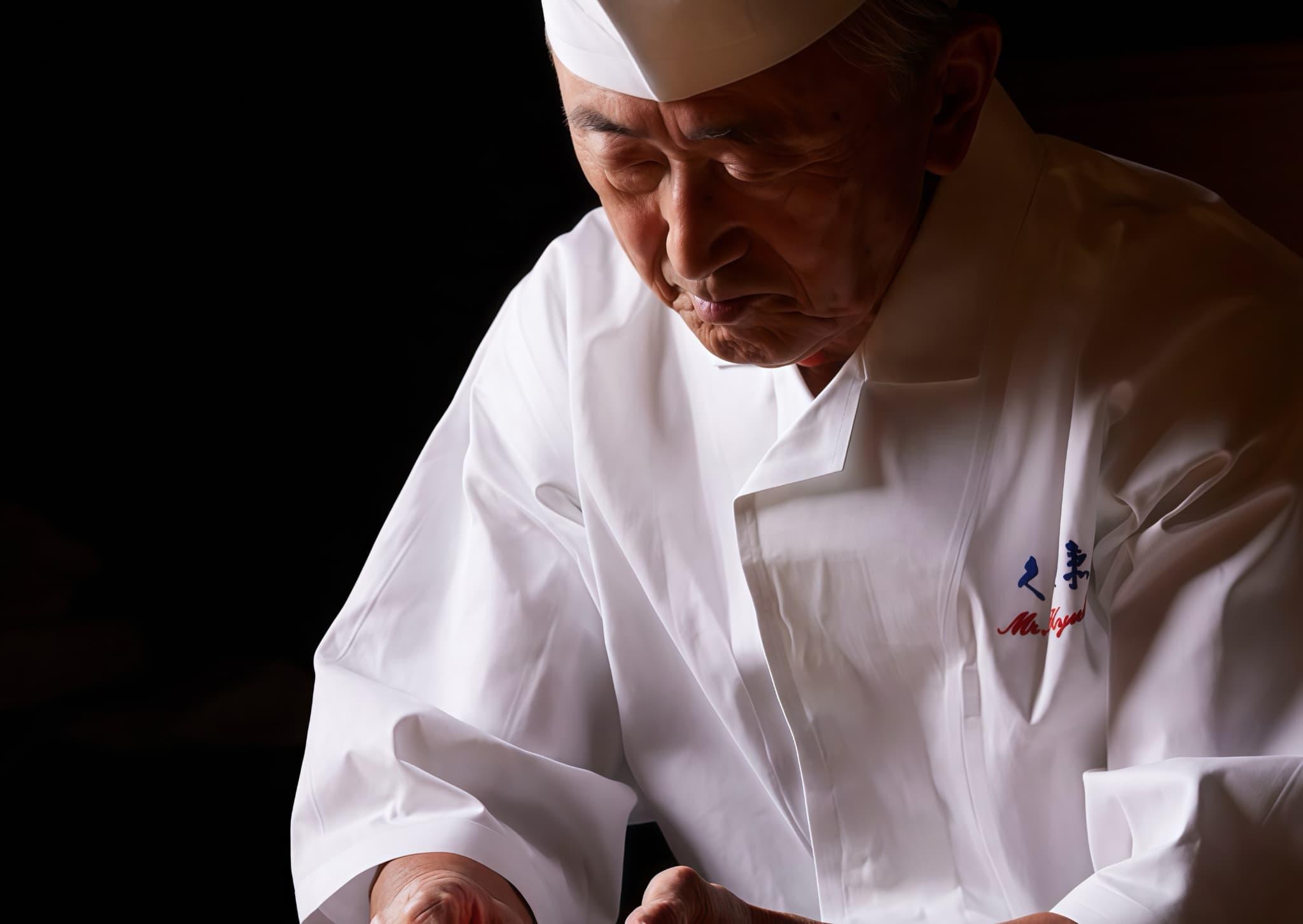
The Legacy of a Ginza Landmark In Ginza, a district where countless high-end sushi restaurants compete, Ginza Kyubey has maintained its renown since its founding in 1935. It is a world-famous establishment that everyone knows. Kyubey’s contributions to the world of Edomae sushi are immense, having been the first to use sea urchin (uni) and salmon roe (ikura) as sushi toppings and inventing the "Gunkan-maki" (battleship roll) now seen everywhere. A little-known episode involves U.S. President Barack Obama; while his dinner with the Japanese Prime Minister at Sukiyabashi Jiro is famous, it is said he secretly ordered sushi from Ginza Kyubey twice—before and after the meeting—and had it delivered to his room.
The Origins of Ginza Kyubey
Kyubey opened in 1935 when the founder, Hisaji Imada, was 26 years old. Imada had moved from Akita to Tokyo at age 16 to apprentice at Misuji in Kobikicho. After 10 years of training, he opened his own shop in Ginza 8-chome. During his days as a craftsman, his seniors called him by the nickname "Kyubey," which he chose as the restaurant's name. Following Hisaji’s death in 1985, his son Yosuke succeeded him. Since 2024, Yosuke’s eldest son, Takahisa, has protected the Kyubey tradition as the third-generation owner.
One Name, Five Restaurants: Choosing Your Kyubey
Today, Kyubey operates five restaurants: the original honten in Ginza, three hotel branches in Tokyo at Hotel Okura, Hotel New Otani, and Keio Plaza Hotel, plus one inside the Imperial Hotel Osaka.
They all share the Kyubey name and philosophy, but the experience differs. The hotel branches offer Kyubey's signature sushi in refined hotel settings and, importantly, can be reserved online through services such as Ikyu, often with relatively short notice.
The Ginza honten is different. This is the original five-story flagship, home to Kyubey's largest team of itamae and its gallery of Rosanjin ceramics. Reservations are accepted only by telephone in Japanese, and online booking is not available.
If one of the hotel branches suits your itinerary, booking directly is usually the simplest option. If your goal is to experience the original Ginza counter, TableEX can handle the reservation process on your behalf.
One final note for anyone researching the restaurant: some older guides still mention a Kyubey branch at the Imperial Hotel Tokyo. That location has since closed.
The Sushi of Ginza Kyubey
The heart of Kyubey’s sushi is the shari (rice). Because red vinegar (akazu) has a scent and acidity that is too strong, they use only rice vinegar and salt for the nigiri rice to highlight the delicate flavors of the toppings. Kyubey’s sushi is characterized by a soft, crumbling texture of rice that integrates with the umami of the fish, leaving a quiet and elegant lingering taste.
Among Edomae sushi menus dating back to the Edo period, the "Gunkan-maki" is said to have originated at Ginza Kyubey. Around 1941, at the start of World War II, a regular customer in the shipping business brought in precious sea urchin from Hokkaido and asked Hisaji if it could be made into sushi. At the time, using sea urchin was taboo because it was too soft and would collapse when pressed. However, Hisaji, who valued giving shape to new ideas, accepted the order immediately. Through trial and error, the "Gunkan-maki"—where the rice is surrounded by seaweed and topped with sea urchin—was born. This shape prevented the sushi from collapsing before reaching the mouth. While mocked by peers and criticized by some media as "bizarre," Hisaji undauntedly created Gunkan-maki using other difficult-to-press toppings like salmon roe and baby scallops.
Even today, many guests visit specifically for this "Gunkan-maki." While it looks simple, there is a specific commitment to its service: "Sushi is all about texture. If the seaweed becomes damp from the moisture of the uni and rice, it is ruined. We calculate the time the guest will eat, pressing it just before serving and handing it directly from hand to hand." This maximizes the crispy texture of the seaweed. The secret to enjoying it is to put it in your mouth without a moment's delay after receiving it.
The Training System for Sushi Chefs
In the Japanese sushi world, there are three prestigious "schools" (training grounds for young chefs). The first is Sushi Sho, opened by Keiji Nakazawa. The second is Sushi Kanesaka, led by the industry’s new leader, Shinji Kanesaka. The third is the world-famous historic shop, Ginza Kyubey. All are prestigious institutions that continue to produce excellent sushi chefs. However, since Sushi Kanesaka originated from Ginza Kyubey, there is a strong view that Ginza Kyubey is effectively the number one sushi school in Japan.
At Kyubey, everything from cooking methods to hospitality is theorized and strictly taught. All craftsmen who join must learn the "Five Disciplines of an Itamae":
Being able to prepare crisp, professional dishes for any guest.
Being a cashier capable of accurate calculations.
Being a sommelier capable of introducing all 40+ types of sake in the shop.
Being an entertainer who showcases knife skills and sushi-pressing techniques.
Acting as if they are the owner representing the shop to the guest.
Kyubey has 120 seats between the main and annex buildings, with over 10 craftsmen at the counters, but the comfort is the same regardless of where you sit. "Each person has their basic post, but anyone can do the same job no matter where they stand," says third-generation Takahisa proudly. At the Ginza main branch, over 200 guests visit during lunch alone on busy days. The intensity of the massive preparations starting from early morning is fierce. "Kyubey-trained chefs are overwhelmingly fast at prep. They learn the work with their hands by preparing for hundreds of people every single day for years," says a young chef at a popular Ginza shop who graduated from Kyubey.
Preparation is Everything
At Kyubey, the philosophy is simple: even the most skilled artisan cannot compensate for inferior ingredients. The soul of sushi lies in the quality of the fish. Whether a restaurant is exceptional or mediocre depends entirely on two things: sourcing from trusted wholesalers and the precision of the shikomi (preparation). Take Kohada (Gizzard Shad), for example. The process begins by butterflying the fish and covering the skin side with a generous layer of salt. It sits for several hours to draw out excess moisture before being rinsed with vinegar. Only then is it submerged in fresh vinegar to complete the cure. If the salting is too light, the flesh remains soft and lacks firmness; if the rinsing is careless, the flavor will never find its balance. The preparation of Hikarimono (shiny, silver-skinned fish) is the true litmus test of a chef’s skill.
Kyubey’s Signature Favorites
Maguro (Bluefin Tuna) The undisputed king of sushi. Known for its rich, buttery texture, it releases a distinct aroma the moment it touches the palate. From the lean Akami to the marbled Chutoro, Otoro, and Shimofuri, everyone has their favorite cut. It is a topping of immense depth.
Tai (Sea Bream) & Hirame (Flounder) Sea bream peaks from winter to spring, while flounder is at its best from autumn to winter. At Kyubey, both are typically available starting around September each year.
Anago (Saltwater Eel) The way anago is simmered and grilled reveals the true caliber of a chef. Kyubey’s signature style involves simmering the eel in a sweet and savory glaze, then lightly searing it over a flame just before serving to add a subtle, smoky fragrance.
Mushi-Awabi (Steamed Abalone) Best enjoyed in the summer. Steamed with salt, this abalone offers a firm yet tender texture and an ocean aroma that instantly whets the appetite.
Kuruma-Ebi (Japanese Tiger Prawn) Served either as "Odori" (fresh and raw) or lightly parboiled for about 25 seconds so the miso remains creamy. We call this perfectly timed boil "just out of the bath," a state where both the color and fragrance are at their peak.
Courses and Prices
The course names read like a potter's shelf: Oribe, Karatsu, Iga, and Bizen. That is no accident. Each is named after a traditional style of Japanese ceramics, reflecting the Rosanjin pottery lineage displayed in the gallery at Kyubey's honten.
At the hotel branches, lunch begins at around ¥9,000. The Oribe course is ¥12,100, the Kyubey course ¥24,200, and the Bizen course ¥36,300. Prices include tax and service, while same-day cancellations incur a charge of ¥5,000 to ¥10,000 per guest.
At the honten, omakase prices are confirmed directly with the restaurant. Lunch is considerably more approachable than dinner, making a counter lunch the traditional first experience for many guests, particularly those looking to experience Kyubey with a budget of around ¥10,000.
Booking Kyubey Ginza Honten (Main Branch)
The Ginza main branch is a five-story masterpiece of Japanese modernism. It even features a "Rosanjin Mini Gallery" displaying works by the legendary ceramicist Kitaoji Rosanjin, who was a close friend of the founder. Interestingly, the former building was designed by Kunio Maekawa, a disciple of the architectural giant Le Corbusier.
The honten takes reservations by phone only, and prime dinner seats go well ahead — especially in autumn and December. Lunch is the softer target for shorter notice. Seats in front of an itamae are the point of this restaurant, and counter requests can be passed along when booking; it helps to mention a first visit or an occasion.
We make that call in Japanese, confirm your seats, and you pay the restaurant's own prices plus our flat fee.

Who is Ginza Kyubey Recommended For?
Recommended for:
Those looking to experience authentic Edomae sushi on a budget of around 10,000 JPY.
Diners who prefer a welcoming and professional atmosphere over the potential hurdles of small, local-only shops.
Those who prioritize peace of mind through stable, consistent, and reliable service.
Who Might Prefer Other Options?
Connoisseurs seeking the absolute highest, top-tier level of Edomae sushi beyond the standard.
People seeking a highly individualized or avant-garde "signature" style.
Those pursuing a niche, experimental culinary experience that breaks from the crowd.
Renowned Sushi Restaurants by Kyubey Alumni
Sushi Kanesaka (鮨かねさか)
A titan in the modern sushi world. The owner, Shinji Kanesaka, was so talented during his apprenticeship at Kyubey that guests requested him by name over seasoned veterans. After striking out on his own, Kanesaka established the "Kanesaka School"—a powerhouse in the industry alongside the "Sushi Sho" group. He has mentored the creators of Tokyo’s most elite spots, including Sushi Saito and Sushiya Ichiryu. His movements are remarkably fluid, described as "captivating" even by the legendary Takashi Saito. Kanesaka’s sushi is defined by sharp, clean cuts and a masculine, structural beauty that is among the finest in Japan.
Sushi Saito (鮨さいとう)
Universally recognized as one of the world’s most prestigious sushi destinations and a former long-time Michelin 3-star holder. Owner Takashi Saito, often called Japan’s greatest sushi artisan, was scouted by his senior, Shinji Kanesaka, during their Kyubey days to help launch Sushi Kanesaka. In 2007, he went independent with Kanesaka’s full support. Saito’s stoic dedication to the orthodox roots of Edomae sushi has elevated his craft to what many call "the best in the world." Every piece is a 100-point masterpiece of balance. Saito’s ultimate dream is to one day open a sushi academy to pass on not just technique, but the spirit of the craft.
Sushi Arai (鮨あらい)
A crown jewel of the Ginza sushi scene. After honing his skills at Kyubey and Sushi Sho, Yuichi Arai opened his own doors in 2016. After years of refinement, Arai has developed a unique style that transcends his origins. His signature is a firm, vinegar-forward shari (rice) paired with Japan’s finest Bluefin tuna, sourced daily from the top wholesaler, Yamayuki. Within a short time, it became one of Tokyo's most difficult tables to book, with reservations often filled a year in advance.
Sushidokoro Suzu (寿し処寿々)
Opened in 2005 near the National Diet Building, this restaurant is a local favorite. Owner Yoichiro Fujii trained in traditional Japanese cuisine before joining Kyubey in his mid-20s to master sushi and hospitality. His sushi is delicate, featuring high-quality seafood hand-picked at the market paired with elegantly seasoned rice. The lunch omakase is particularly highly regarded by enthusiasts for offering top-tier quality at an accessible price point.
Ginza Iwa (銀座いわ)
A historic Ginza destination with a strong international following. Owner Hisayoshi Iwa spent 16 years training at Kyubey and Sushi Kanesaka before going independent in 2012. His technique is legendary; he forms each piece with incredible speed, finishing in just two or three deft movements. Having maintained a Michelin 1-star rating for ten consecutive years, his craftsmanship remains as sharp as ever a decade after opening.
Sushi Takaharu (日本橋 鮨たか晴)
The most exciting newcomer from the Kyubey lineage. After 11 years of training, the acclaimed rookie opened his own shop in July 2024. His style is a perfect balance: strictly honoring traditional techniques while delivering a modern flavor profile. He captivates local connoisseurs with "old-school" methods rarely seen today, such as Yuzuke (blanching tuna in hot water, shocking in ice, then marinating in soy). Fluent in English, he represents the new era of sushi chefs, providing seamless hospitality to guests from around the globe.